
- +You want the most fitting flexibility from a stock driver
- +You're planning to visit a fitter who can tune both weights
- +You want the most advanced carbon integration available
- +You miss in both directions and want weight to correct it
- +You're a Callaway player upgrading from an older model
- +You want maximum MOI forgiveness (Qi35 Max)
- +You value clear, tactile mishit feedback
- +You want a simpler adjustment system (one weight)
- +You're a chronic slicer who needs draw-bias correction
- +You're a TaylorMade player upgrading from the Qi10 or Stealth
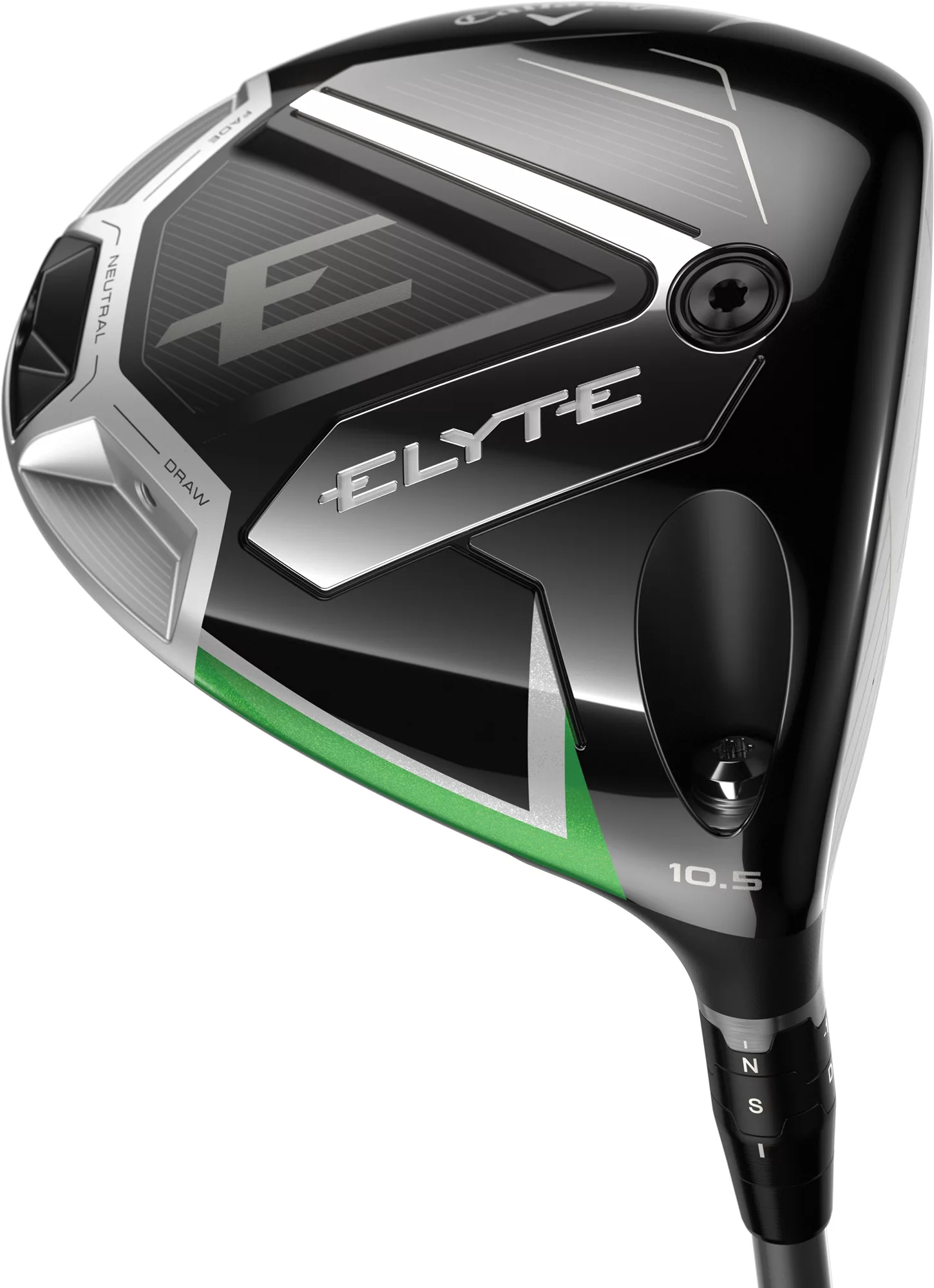
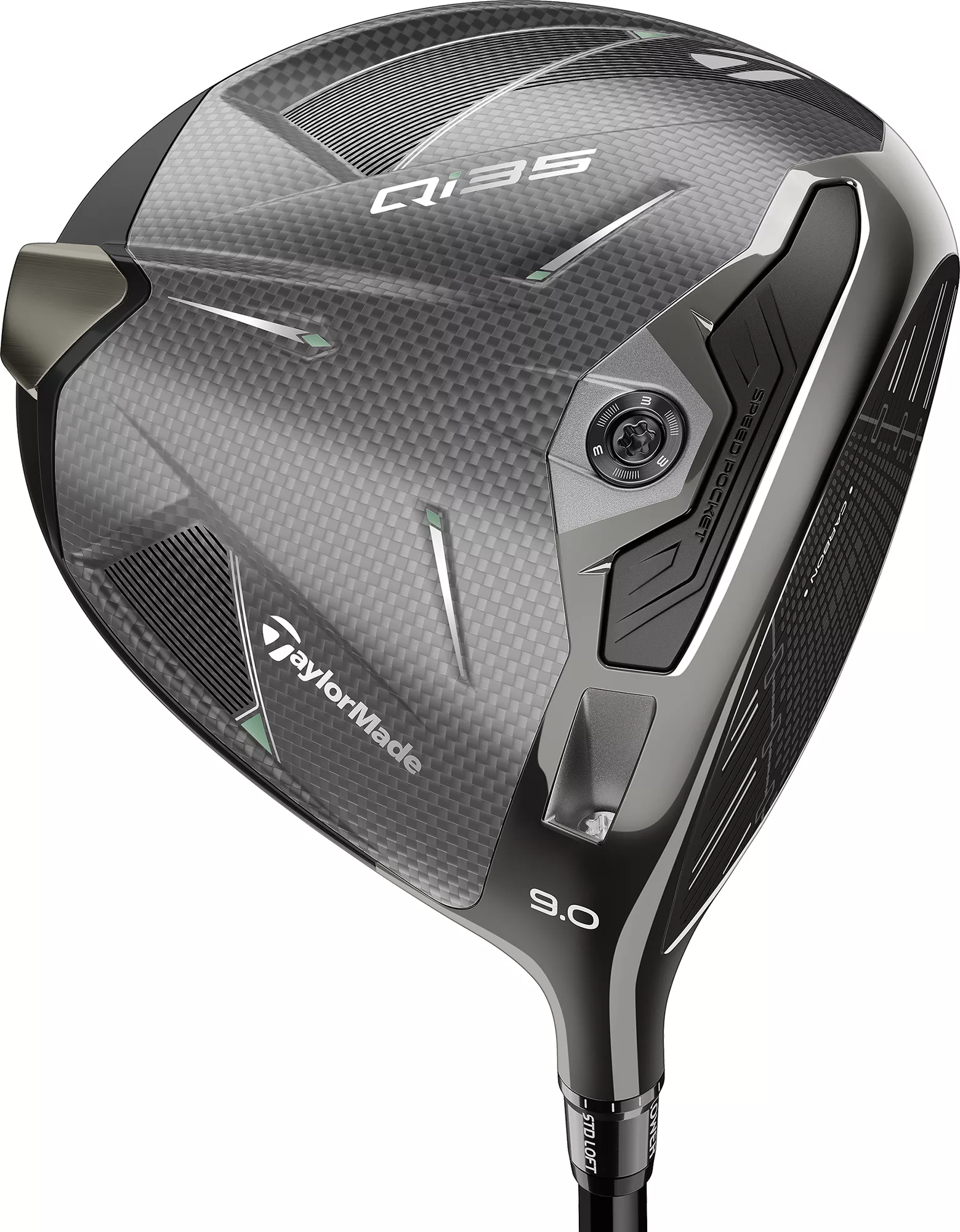
Specs Comparison
| Spec | Callaway Elyte | TaylorMade Qi35 |
|---|---|---|
| Year | 2025 | 2025 |
| Head Size | 460cc | 460cc |
| Carbon | 360 deg Carbon Chassis | Carbon Twist Face + sole |
| Face Tech | Ai 10x Face (titanium + carbon) | Twist Face + Carbon crown |
| Loft Options | 9, 10.5, 12 degrees | 9, 10.5, 12 degrees |
| Adjustability | OptiFit 4 hosel + 2 adj. weights | TAS (Tungsten Adaptive Speed) |
| Stock Shaft | Project X HZRDUS Smoke | Fujikura Ventus Red |
| Forgiveness | High | Very High (Max model) |
| Price Used | ~$369 used | ~$359 used |
Head to Head
Technology
Edge: Elyte (face tech breadth), Qi35 (structural focus)Callaway Elyte
The Callaway Elyte marks Callaway's most complete carbon integration to date. The 360-degree Carbon Chassis covers the full crown, sole, and much of the perimeter -- removing titanium mass and repositioning it to the face and perimeter weights. The Ai 10x Face is the result of Callaway's 10th generation of AI-assisted face design, trained on 10 times the impact data of the previous Ai Smoke generation. It produces faster and more consistent ball speeds across a wider face area than any previous Callaway driver. Two adjustable weights give meaningful fitting flexibility.
TaylorMade Qi35
The TaylorMade Qi35 pushes the Carbon Twist Face concept to its logical conclusion -- the face itself uses carbon fiber integrated into a titanium matrix, producing a stiffer face that flexes more efficiently at impact. Tungsten Adaptive Speed (TAS) positions a 46g tungsten weight in the rear sole to maximize MOI. The Qi35 is engineered around one central goal: maximum ball speed from maximum MOI, achieved through carbon where it helps most.
Distance
Edge: Qi35 Max (off-center), Elyte (adjustable)Callaway Elyte
The Elyte produces excellent ball speed from its Ai 10x Face -- competitive with anything in the 2025 market. The dual adjustable weight system lets you shift CG front to back, which gives control over spin rate and launch angle. In neutral position, the Elyte is a genuinely long driver. For golfers who tend toward higher spin, moving the front weight forward drops spin and adds distance.
TaylorMade Qi35
The Qi35 Max is built for one thing above all else: maximum ball speed with maximum MOI. TaylorMade's Inertia Generator positioned in the rear keeps the CG deep and the MOI as high as possible, which means very consistent ball speeds on mishits. Center-strike distance is comparable to the Elyte. Off-center, the Qi35 Max may have a slight edge due to its higher MOI.
Forgiveness
Edge: Qi35 MaxCallaway Elyte
The Callaway Elyte is a high-forgiveness driver but it is designed to be a fitting tool as much as a pure forgiveness machine. The two adjustable weights trade some perimeter mass for CG flexibility. Golfers who get properly fitted and set the weights correctly will have excellent forgiveness. Golfers who leave the weights in the default position will find it highly forgiving -- but not the absolute maximum.
TaylorMade Qi35
The Qi35 Max is built for maximum MOI. Its 10,000+ MOI rating is the result of the 46g tungsten Inertia Generator sitting at the rear of the clubhead -- the most impactful MOI enhancement TaylorMade has used. On heel and toe misses, the Qi35 Max loses significantly less ball speed than most competitors. For high handicappers who prioritize forgiveness above all else, the Qi35 Max has a clear advantage.
Adjustability
Edge: ElyteCallaway Elyte
The OptiFit 4 hosel offers four loft positions covering loft, lie, and face angle combinations. Two adjustable weights -- 12g and 4g -- can be positioned in draw or fade positions, giving meaningful ball-flight shaping control. This is one of the most comprehensive fitting systems available in a production driver. For golfers who visit a fitter or want to self-tune, the Elyte's adjustment range is exceptional.
TaylorMade Qi35
The Qi35's TAS system uses a 16g primary weight that shifts from draw to neutral to fade position across three settings in the rear sole. The loft sleeve adds +/- 2 degrees. The system is simpler than the Elyte's dual weight setup but covers the most common fitting scenarios. For the golfer who wants a simple, meaningful adjustment without complex setup, TAS is intuitive and effective.
Feel & Sound
Edge: Qi35 (clearer feedback)Callaway Elyte
The Elyte's 360-degree Carbon Chassis changes the acoustic profile significantly compared to Callaway's previous drivers. The sound is bright but slightly muted compared to a full titanium head -- more of a click than a crack. Feedback on mishits is moderate: you know when you've missed, but the carbon construction softens the vibration. Some golfers love the distinctive feel; others find it imprecise compared to the metallic feedback of competitors.
TaylorMade Qi35
TaylorMade drivers have a distinct higher-pitched, metallic crack at impact. The Qi35 maintains this character despite its carbon crown. Mishit feedback is clearer and more tactile than the Elyte -- you feel the difference between a flush strike and a slightly-off one. For golfers who use feel as a calibration tool during a round, the Qi35's feedback advantage is real.
Our Verdict
Both drivers are excellent. Neither is a clear overall winner — which one wins depends entirely on your player profile.
For high handicappers who want maximum forgiveness and a draw-bias driver to combat a slice: the Qi35 Max is the pick. It has higher MOI, clearer mishit feedback, and is $10 cheaper used.
For mid-handicappers who get fitted and want comprehensive weight adjustability and the most advanced face tech available: the Callaway Elyte is the pick. Two weights, one hosel, and an AI face optimized across more impact data than anything before it.
Frequently Asked Questions
Is the Callaway Elyte better than the TaylorMade Qi35?
It depends on your player profile. The Elyte has more comprehensive adjustability (two weights + hosel vs. one weight). The Qi35 Max has higher official MOI and clearer mishit feedback. For pure forgiveness, Qi35 Max. For fitting flexibility, Callaway Elyte.
How much does the Callaway Elyte cost used compared to the Qi35?
Both are available used for $350-$375 on 2nd Swing in 2026. The Elyte Standard is typically ~$369 and the Qi35 Standard is ~$359 -- close enough that price shouldn't be the deciding factor.
Which is more forgiving -- the Elyte or the Qi35?
The TaylorMade Qi35 Max has a higher official MOI (10,000+) than the Callaway Elyte, making it the more forgiving option head to head. For the standard models, forgiveness is comparable. If maximum forgiveness is your primary goal, the Qi35 Max is the pick.
What shaft does the Callaway Elyte use compared to the Qi35?
The Elyte comes with the Project X HZRDUS Smoke stock shaft. The Qi35 uses the Fujikura Ventus Red. The HZRDUS Smoke is slightly stiffer-playing for its weight class; the Ventus Red has a softer tip and higher launch. Shaft feel can be a meaningful differentiator for some golfers.
Should I buy the Qi10 Max or Qi35 instead of these?
If budget is a factor, the Qi10 Max used at ~$275 delivers very similar performance to the Qi35 Max at ~$359. For most mid-to-high handicappers, the extra $84 for the Qi35 Max buys 2-4 yards. The Elyte vs. Qi35 debate is for golfers where performance is the priority and $350+ is within budget.