The Four Things High Handicappers Actually Need
Forgiveness on Off-Center Hits
High handicappers hit the sweet spot less often. A forgiving ball minimizes distance and direction loss on mis-hits. Two-piece construction with a large, soft core is the most forgiving design available.
Straight Ball Flight
Side spin is the enemy of the high handicapper. Balls engineered to reduce side spin, like the Bridgestone e-series and Maxfli StraightFli, keep you in play more often, which is the single most effective way to lower your score.
Durability
Urethane tour balls scuff on cart paths and chip on deep rough shots. A Surlyn or ionomer cover ball survives a full round looking nearly new and handles the occasional worm-burner without cracking.
Appropriate Compression
Most high handicappers have swing speeds between 75 and 90 mph. A compression-90 tour ball won't compress at those speeds. Stick to 40-80 compression until your swing speed and consistency improve.
The Best Golf Balls for High Handicappers in 2026
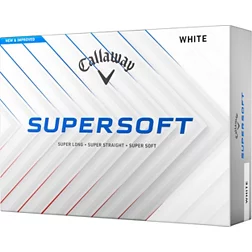
Callaway Supersoft
Best for: High handicappers who want maximum forgiveness and straight flight
Compression
38
Cover
Trionomer
Construction
2-piece
Dimples
332
The Supersoft earns the top spot for high handicappers for the same reason it tops the beginner list: it does the fundamentals better than anything else at this price. Ultra-low compression means it compresses at any swing speed, the HEX Aerodynamics dimple pattern reduces drag and side spin, and the soft feel makes mis-hits feel less punishing. For a golfer shooting in the 90s to 100s, this ball takes variables off the table and lets you focus on your game.
Pros
- +Compression 38 works for all swing speeds
- +Reduces side spin for straighter drives
- +Very affordable, low anxiety when you lose one
- +Consistent performance round to round
Cons
- -No greenside spin control
- -Ionomer cover scuffs more than urethane
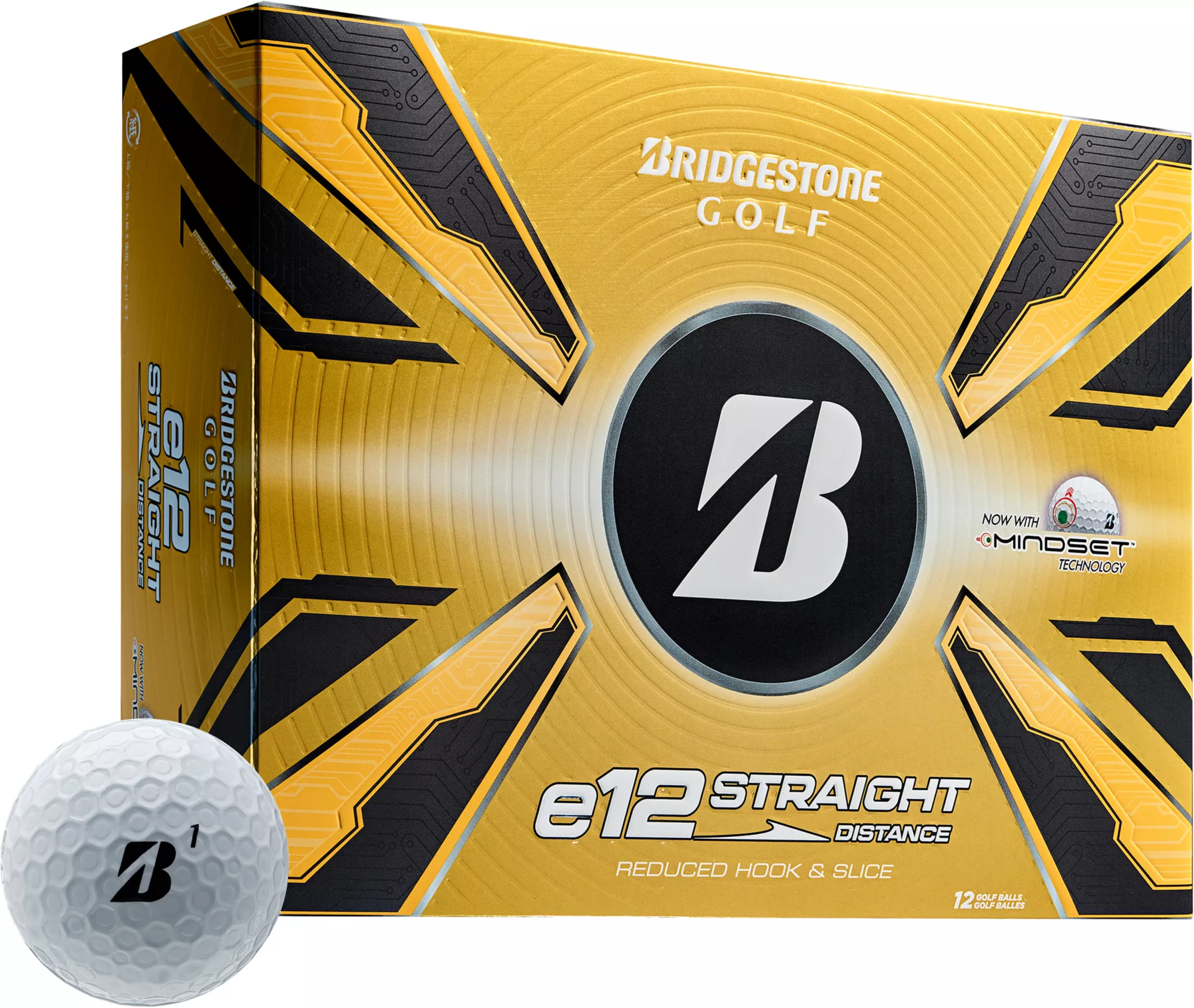
Bridgestone e12 Straight
Best for: High handicappers who struggle with a slice or significant left-to-right curve
Compression
80
Cover
Surlyn
Construction
3-piece
Dimples
326
Bridgestone built the e12 Straight around a single objective: reducing side spin. The e-Series aerodynamic dimple pattern and core design work together to reduce the gear effect that causes slices and hooks. If your biggest problem off the tee is a chronic curve, this is the most targeted ball solution you can buy. It is not cheap for a non-tour ball, but the straightness dividend is real — and keeping more shots in play is the fastest way to lower your score as a high handicapper.
Pros
- +Engineered specifically to reduce side spin
- +Produces measurably straighter flight than standard balls
- +3-piece construction adds distance over 2-piece budget balls
- +Very durable Surlyn cover
Cons
- -Firmer feel than compression-60 or lower options
- -More expensive than most budget balls
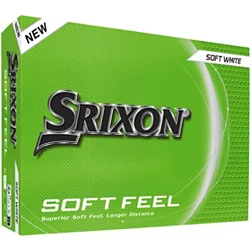
Srixon Soft Feel
Best for: High handicappers who want quality without overpaying
Compression
60
Cover
Ionomer
Construction
2-piece
Dimples
338
Srixon is one of the most underrated names in golf balls. They sponsor several tour players, manufacture their own tour balls, and that expertise filters down to every price tier. The Soft Feel at $20 a dozen punches well above its weight. The 338-dimple cover produces a more stable ball flight than most budget balls, the feel off the putter is genuinely soft, and the compression is low enough to suit most high-handicapper swing speeds. It is the best $20 golf ball on the market, full stop.
Pros
- +Best ball in its price tier
- +338-dimple design gives stable flight
- +Real Srixon quality control
- +Soft enough for most swing speeds
Cons
- -Not as corrective as the e12 Straight for slicers
- -No short-game spin
Maxfli StraightFli
Best for: High handicappers whose primary problem is direction, not distance
Compression
60
Cover
Ionomer
Construction
2-piece
Dimples
372
Maxfli's StraightFli is purpose-built around one thing: straighter ball flight. The 372-dimple aerodynamic pattern is the highest dimple count you'll find at this price and it shows in the flight. The core is designed to reduce side spin at impact, and the result is a ball that consistently flies closer to your target line than most options at this price. For a high handicapper whose miss is a chronic slice or hook, this is one of the most honest equipment solutions available.
Pros
- +372 dimples produce exceptional straight flight
- +Core specifically engineered to reduce side spin
- +Good value at $25 a dozen
- +Consistent performance across all shot types
Cons
- -Firmer feel than softest options
- -Minimal greenside spin
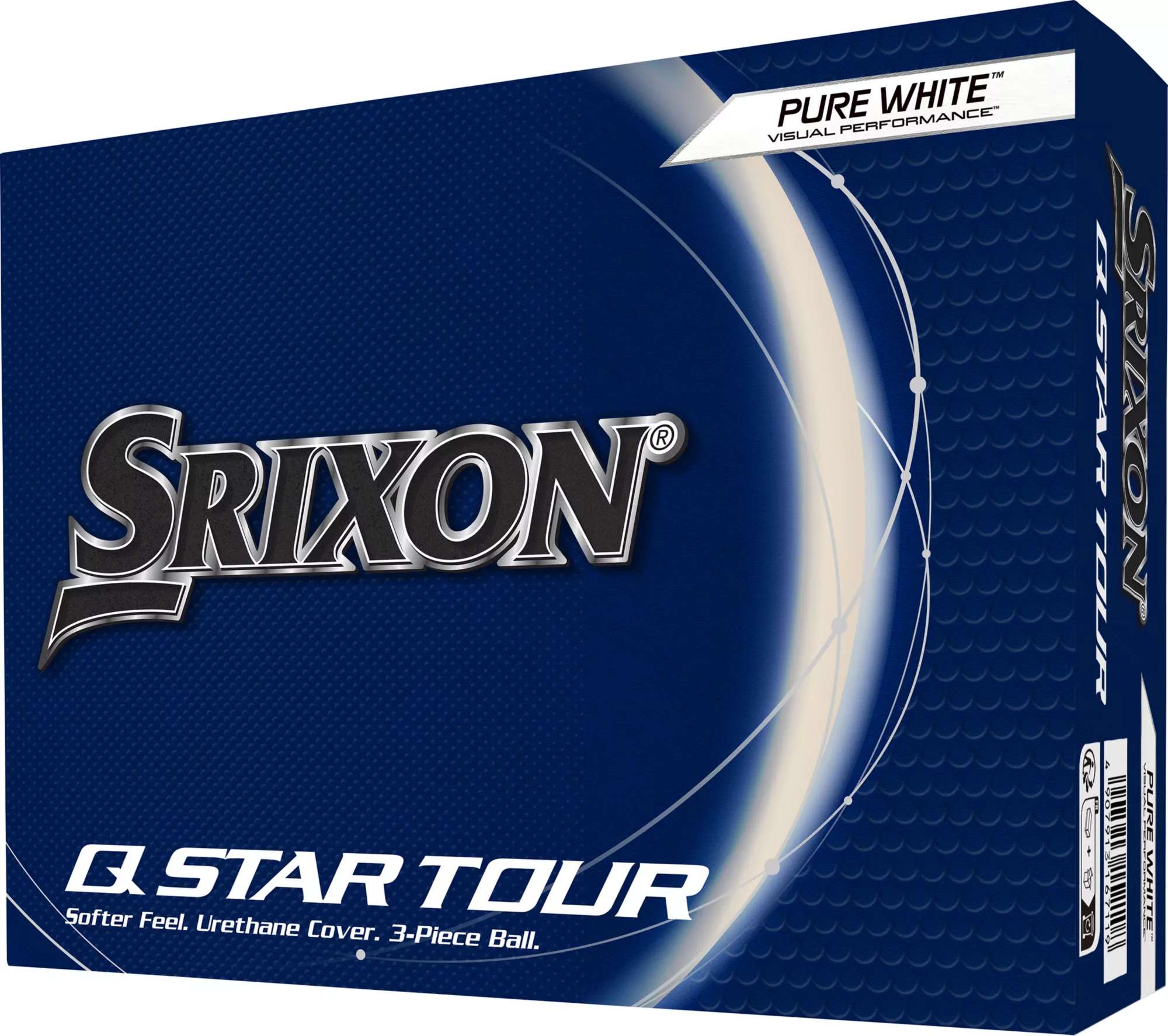
Srixon Q-Star Tour
Best for: High handicappers who are improving and want to step up to a urethane ball
Compression
72
Cover
Cast Urethane
Construction
3-piece
Dimples
338
Once your ball striking becomes more consistent, a urethane cover starts to pay off — and the Srixon Q-Star Tour is the best entry point into that territory. At compression 72 and $35 per dozen it sits right between the budget ionomer balls and the full tour options, and the cast urethane cover gives you genuine short-game feedback that no ionomer ball can match. Srixon makes their own tour balls and that engineering filters directly into the Q-Star Tour. For a high handicapper who is breaking 90 regularly and starting to care about what happens around the greens, this is the right upgrade.
Pros
- +Cast urethane cover — a real step up in short-game feel
- +Compression 72 suits improving high-handicap swing speeds
- +Srixon tour-quality manufacturing at a mid-range price
- +338-dimple design produces consistent, stable flight
Cons
- -Urethane scuffs faster than Surlyn on cart paths
- -Not worth the upgrade if you are still losing several balls per round
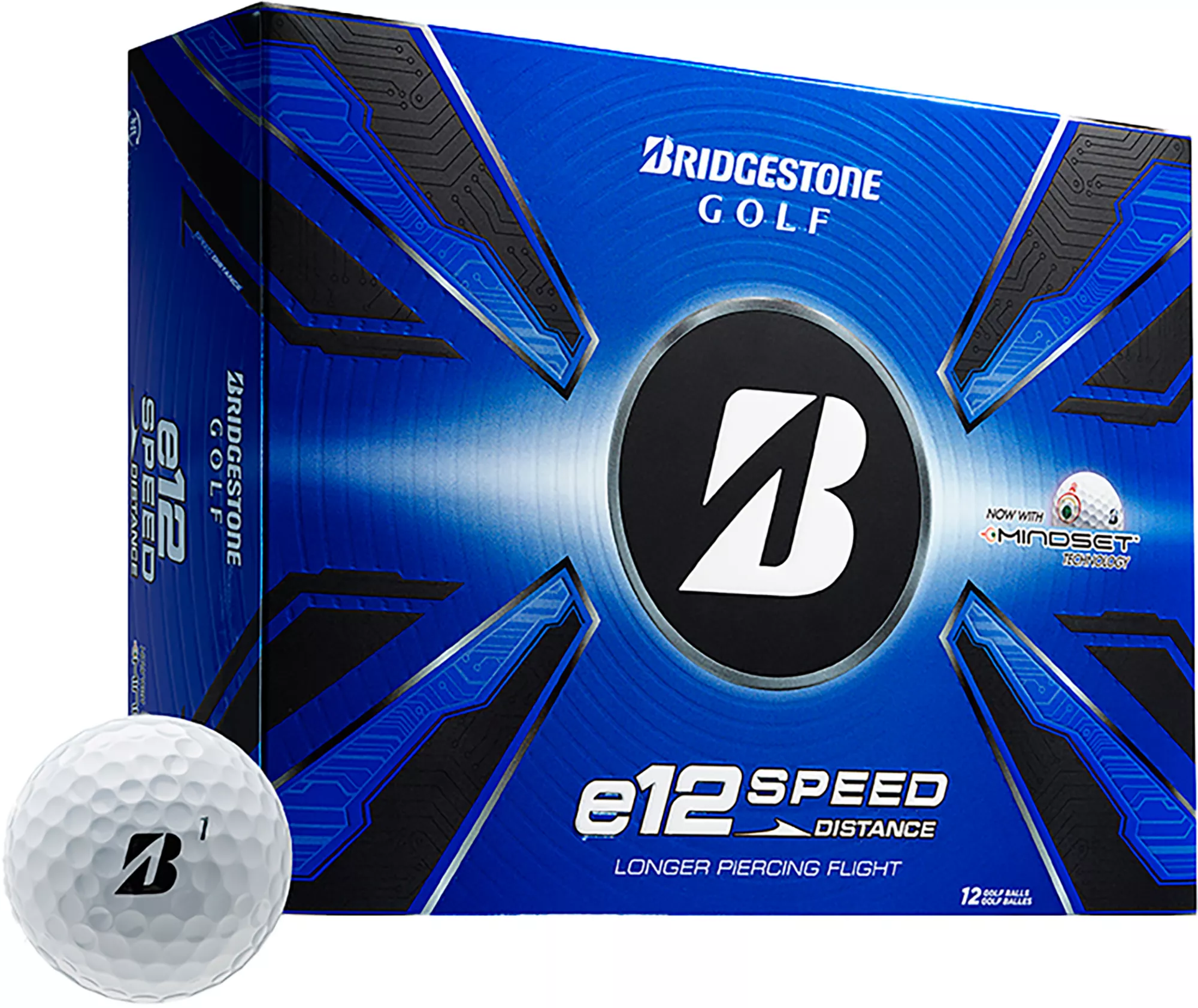
Bridgestone e12 Speed
Best for: High handicappers who want maximum distance and durability
Compression
80
Cover
Surlyn
Construction
3-piece
Dimples
326
The e12 Speed is Bridgestone's distance-first e-Series ball — same durable Surlyn cover and straight-flight aerodynamics as the e12 Straight, but with a firmer, faster core tuned for swing speeds in the 80–95 mph range. If you want a ball that goes far, flies straight, and survives being knocked against cart paths all day, this delivers on all three. For the high handicapper who cares about distance and durability above everything else, the e12 Speed is the right call.
Pros
- +Distance-optimized core for 80–95 mph swing speeds
- +Surlyn cover is extremely durable
- +Straight-flight aerodynamics keep you in play
- +Consistent performance round after round
Cons
- -Firmer feel — not ideal for feel-first golfers
- -No short-game spin control
Quick Comparison
| Ball | Compression | Cover | Best For | Price |
|---|---|---|---|---|
| Callaway Supersoft | 38 | Trionomer | Best Overall | ~$22/dozen |
| Bridgestone e12 Straight | 80 | Surlyn | Best for Slicers | ~$35/dozen |
| Srixon Soft Feel | 60 | Ionomer | Best Value | ~$20/dozen |
| Maxfli StraightFli | 60 | Ionomer | Best for Straight Flight | ~$25/dozen |
| Srixon Q-Star Tour | 72 | Cast Urethane | Best Upgrade Pick | ~$35/dozen |
| Bridgestone e12 Speed | 80 | Surlyn | Most Durable | ~$35/dozen |
Common Questions
Should a high handicapper use a Pro V1?
In most cases, no. The Pro V1 is designed for players who can compress it properly, which requires consistent swing speeds above 90 mph and solid contact. A high handicapper will not access the performance it offers and will actually lose distance compared to a softer, lower-compression ball matched to their swing speed. Save the money.
Does a golf ball really make a difference for a high handicapper?
Yes, but probably not in the way you think. For a high handicapper, the right ball primarily means fewer yards lost on mis-hits, straighter flight off the tee, and more confidence over putts. The difference isn't dramatic, but playing a compression-40 ball vs a compression-90 ball can be a meaningful distance gap if your swing speed is 80 mph.
Can a golf ball help fix my slice?
A ball can reduce the severity of a slice but it cannot fix the root cause, which is swing mechanics. Anti-side-spin balls like the Bridgestone e12 Straight genuinely reduce curvature, and playing a lower-spin ball off the tee helps. But if your slice is severe, lessons will do more than any equipment change.
When is a high handicapper ready for a better ball?
When you start consistently breaking 90 and are making better-than-average contact, a mid-range urethane ball like the Maxfli Tour or Srixon Q-Star Tour starts to make sense. You'll begin to feel the short-game difference that a urethane cover delivers around the greens.