
- +Your swing speed is between 75-100 mph
- +Soft feel off the putter is your top priority
- +You want a forgiving, straight-flying premium ball
- +You play recreational golf and want easy compression
- +You're a mid-handicapper looking to upgrade from a distance ball
- +Your swing speed is consistently above 95 mph
- +Short-game spin and control are your priority
- +You shape shots and want a responsive ball
- +You play in windy conditions and need a penetrating flight
- +You are a low-to-mid handicapper with consistent ball-striking
Specs Comparison
| Spec | Chrome Soft | Pro V1 |
|---|---|---|
| Compression | 65 | 90 |
| Construction | 4-piece | 3-piece |
| Cover | Urethane | Urethane |
| Core | Graphene Dual SoftFast | Proprietary ZG Process |
| Dimple Count | 332 | 352 |
| Feel | Very Soft | Soft-Medium |
| Driver Trajectory | Mid-High | Mid |
| Driver Spin | Mid | Low-Mid |
| Wedge Spin | High | Very High |
| Price (2026) | ~$48/dozen | ~$54/dozen |
Head to Head
Feel
Edge: Chrome SoftChrome Soft
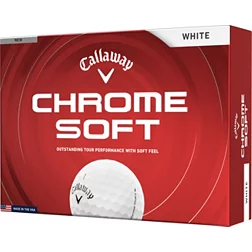
The Chrome Soft is one of the softest premium golf balls on the market. At compression 65, it compresses easily at moderate swing speeds and produces a muted, pillowy sensation off every club. Off the putter it feels almost cushioned — players who prioritize touch and softness over feedback consistently rate it among their favorites. If feel is your primary reason for buying a premium ball, the Chrome Soft sets the standard.
Pro V1
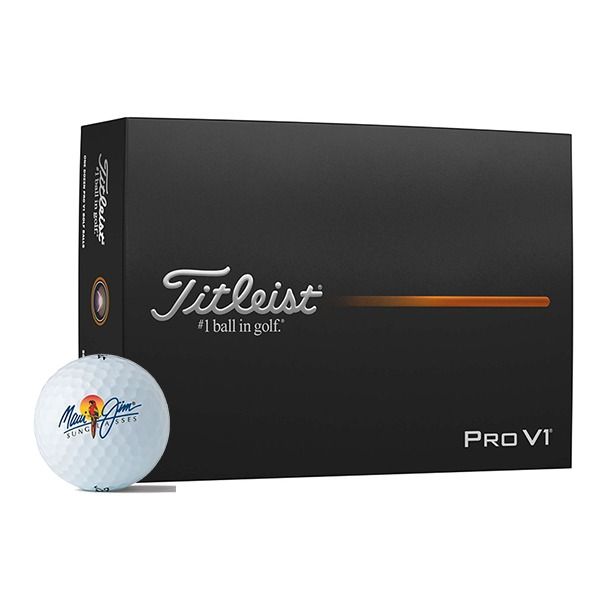
The Pro V1 sits at compression 90, which is meaningfully firmer than the Chrome Soft. It still feels soft by tour ball standards, but there is a distinct difference — the V1 gives more tactile feedback at impact, which better players often interpret as better 'communication' from the clubface. If you want to feel exactly where you made contact, the V1 is the more informative ball.
Distance
Edge: Pro V1 (100+ mph), Chrome Soft (85-100 mph)Chrome Soft
At compression 65, the Chrome Soft is optimized for swing speeds in the 85-100 mph range. Golfers in that bracket compress the ball efficiently and see good ball speed with a mid-high launch. For swing speeds below 85 mph, the Chrome Soft is genuinely one of the longer premium options available. Above 105 mph, the softer core starts to give back ball speed compared to firmer alternatives.
Pro V1
The Pro V1 produces more consistent distance across a wider swing speed range, and specifically outperforms the Chrome Soft for faster swingers. Its lower, penetrating trajectory holds up better into wind and provides more predictable carry distance in variable conditions. For golfers above 100 mph, the Pro V1 is the longer ball in most on-course conditions.
Short Game
Edge: Pro V1Chrome Soft
The Chrome Soft generates very good greenside spin thanks to its urethane cover and four-piece construction. From inside 80 yards, it bites and stops well. Where it gives a little ground is on full wedge shots from 100-130 yards, where the softer compression slightly reduces the bite compared to firmer tour balls. For most recreational golfers, the difference is imperceptible.
Pro V1
The Pro V1 is one of the best short-game balls ever made. The urethane elastomer cover and 352-dimple design produce exceptional spin on full wedge shots and even more impressively on short, slow chip shots. Tour players choose the V1 specifically for its short-game behavior, and the data consistently shows it generating more spin from around the greens than the Chrome Soft.
Consistency and Workability
Edge: Chrome Soft (forgiveness), Pro V1 (workability)Chrome Soft
The Chrome Soft is less workable than the Pro V1, which for most golfers is a feature rather than a flaw. Its lower driver spin and forgiving compression make it a straighter, more predictable ball — particularly on mishits. If you are not intentionally shaping shots, the Chrome Soft flies more consistently from anywhere in the hitting zone.
Pro V1
The Pro V1 rewards better ball-strikers with the ability to shape shots when needed. It responds more directly to swing path and clubface angle changes, which gives skilled players shot-shaping options. It also holds its line more predictably in crosswinds at mid-high swing speeds due to its lower, more penetrating trajectory.
Our Verdict
These two balls aren't really competing for the same golfer. The Chrome Soft is built for feel and soft compression. The Pro V1 is built for short-game spin and shot control.
Under 90–95 mph — the Chrome Soft fits better and costs $6 less. Over 95 mph with a decent handicap — the Pro V1 is the upgrade.
Frequently Asked Questions
Is the Chrome Soft good for a beginner?
The Chrome Soft is excellent for a mid-handicapper or recreational golfer who wants a premium feel without the firmness of a tour ball. It is not ideal for complete beginners — at $48 a dozen, losing them is expensive. Beginners should start with a more durable, lower-cost ball like the Callaway Supersoft or Srixon Soft Feel and graduate to the Chrome Soft once their score is consistently in the 90s.
Does the Chrome Soft go as far as the Pro V1?
For swing speeds between 80-100 mph, the Chrome Soft is often longer off the driver because it compresses more efficiently for that speed range. Above 100 mph, the Pro V1's firmer compression returns more ball speed and it becomes the longer ball. Neither has a clear distance advantage — it depends entirely on your swing speed.
What is the Chrome Soft X and how does it compare?
The Chrome Soft X is Callaway's firmer Chrome Soft model at compression 75, designed for faster swingers who want Callaway's feel but a bit more firmness. It sits between the Chrome Soft (65) and the Pro V1 (90) in compression. It is a good option for players who find the Chrome Soft too soft but don't want the full firmness of the Pro V1.
Can a high handicapper play the Pro V1?
Yes, but they won't extract much of its value. The Pro V1's short-game spin is wasted if you're still working on consistent contact. The firmer compression also means high handicappers don't compress it well at moderate swing speeds, costing them distance. A Chrome Soft, Srixon Q-Star Tour, or Maxfli Tour will perform just as well for less money.
Which ball is better for putting — Chrome Soft or Pro V1?
Most golfers who try both prefer the Chrome Soft on the greens. The softer cover produces a quieter, more muted sound and a softer sensation that feels more controlled at low speed. The Pro V1 is also soft by tour ball standards, but the difference off the putter is one of the more noticeable between these two balls.