- +You consistently slice 15+ yards right and want automatic correction
- +You've tried lessons and the slice keeps coming back
- +You were told in a fitting you need draw-bias weighting
- +You want the OPTM-generation face technology with targeted slice correction
- +You are ready to commit to a fixed draw-bias head
- +Your slice is mild (5–10 yards) or inconsistent
- +You are working on your swing and may correct the slice with instruction
- +You want neutral maximum forgiveness at ~$249 used
- +Your miss is sometimes left and sometimes right (not consistently right)
- +You want Cobra's highest MOI head without committing to directional bias
The DS-ADAPT MAX-K was never built to fix a slice — it was built to minimize the damage from one. The OPTM Max-D is built to fix it. If you have been absorbing a right miss with a neutral high-MOI head and the slice has not improved, the question isn't whether the OPTM Max-D is "better" — it's whether draw-bias correction is the tool you actually need.
Specs at a Glance
| Spec | OPTM Max-D | DS-ADAPT MAX-K |
|---|---|---|
| Generation | 2026 | 2025 |
| Head Size | 460cc | 460cc |
| Face Tech | POI Variable Face | POI Variable Face |
| CG Position | Rear/Heel (draw) | Rear/Center (neutral) |
| Internal Weight | Fixed 11g heel | Perimeter high-MOI |
| MOI | Very High | Very High (highest in DS-ADAPT) |
| Launch | High | Mid-High |
| Spin | Mid-High | Mid |
| Draw Bias | Yes | No |
| Design Goal | Slice correction | Max forgiveness |
| Hosel | FutureFit33 (33 settings) | FutureFit33 (33 settings) |
| Price | ~$549 new | ~$249 used |
Head to Head
Why This Comparison Exists
Edge: Depends entirely on your missOPTM Max-D
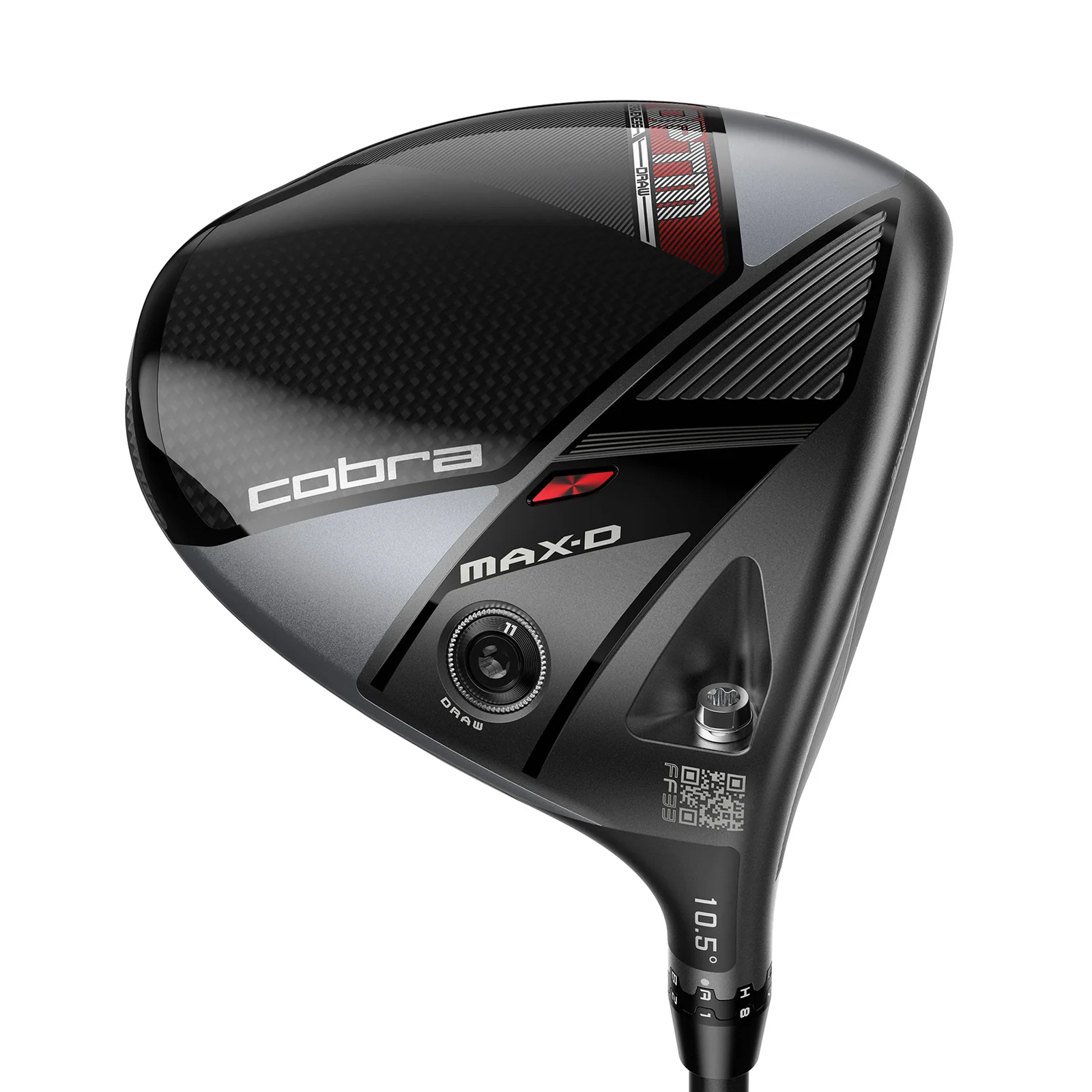
The OPTM Max-D is Cobra's answer to a question the DS-ADAPT lineup couldn't answer: what do you buy from Cobra if you slice? The DS-ADAPT MAX-K was the high-forgiveness head, which helped with the consequences of a slice (off-center hits, wider dispersion) but not with the cause (an open face at impact). The OPTM Max-D's fixed 11g heel weight closes the face before you even start your downswing — it is an active correction, not a passive buffer.
DS-ADAPT MAX-K
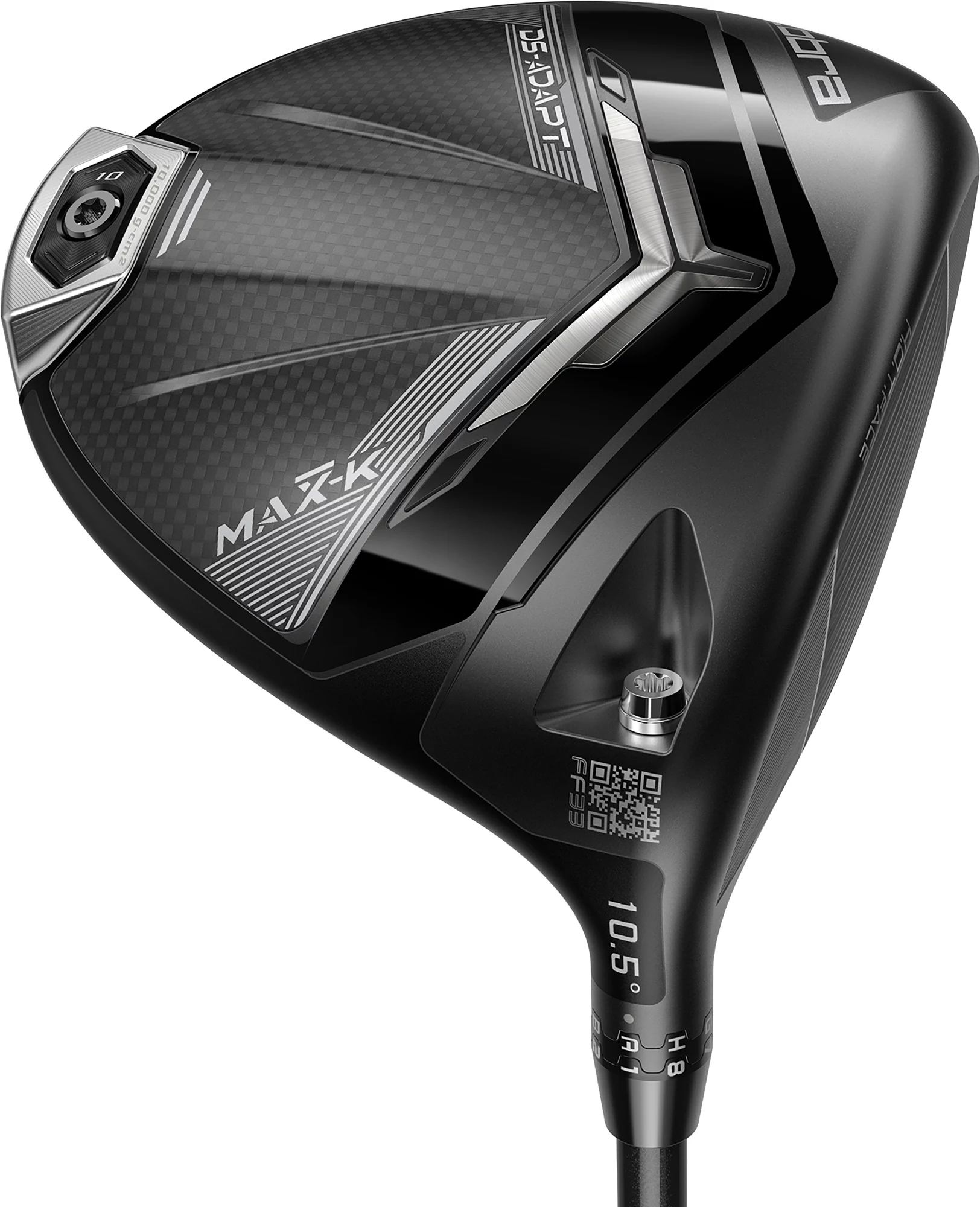
The DS-ADAPT MAX-K was Cobra's best driver for a high-handicapper in 2025 — 10,000+ MOI, POI face, FutureFit33 hosel. Many golfers with a slice chose it because Cobra had nothing more targeted, and the MAX-K's forgiveness helped absorb the off-center hits that a slice often produces. At ~$249 used, it remains a high-value driver. But for a golfer who has confirmed their miss is directional rather than just positional, the OPTM Max-D is the more direct solution.
Slice Correction: Active vs Passive
Edge: OPTM Max-D (for a true slicer)OPTM Max-D
The OPTM Max-D's 11g heel weight is positioned to mechanically close the face at impact — not just reduce the twist from an off-center hit, but actively rotate the face toward closed. For a golfer who slices, this means the face is working with them through impact rather than against them. A 20-yard slice with a neutral driver typically becomes a 10-yard fade or a straight shot with the Max-D. For a golfer who plays a 10-yard fade, it may become a slight draw. The correction is automatic on every swing.
DS-ADAPT MAX-K
The DS-ADAPT MAX-K's rear perimeter CG reduces twisting on off-center hits, which narrows the lateral dispersion of a slice but does not close the face. If your slice is caused by an open face at impact, the MAX-K helps the contact quality but not the face angle — you still arrive at impact with an open face, the MOI just makes the ball go less far right on any given shot. For a golfer whose slice is truly directional (consistently right, not random), this is a partial fix rather than a complete one.
Who Should Upgrade from DS-ADAPT MAX-K to OPTM Max-D
Edge: OPTM Max-D (if slice is significant)OPTM Max-D
The OPTM Max-D is the correct upgrade if your slice is significant (15+ yards right of target), consistent (your miss is always right, rarely left), and you have not been able to correct it through instruction or shaft changes. You are trading the DS-ADAPT MAX-K's neutral maximum forgiveness for the OPTM Max-D's directional correction. If right is your problem, the Max-D directly addresses it in a way the MAX-K never could.
DS-ADAPT MAX-K
The DS-ADAPT MAX-K is worth keeping if your slice is mild (5–10 yards), your miss is sometimes left and sometimes right, or you have made swing improvements that are reducing the slice and you don't want to lock in a draw-bias head before the correction is complete. The OPTM Max-D's fixed heel weighting cannot be removed — it will always promote a right-to-left flight. If your game is improving, you may outgrow the Max-D faster than you outgrow the DS-ADAPT MAX-K's neutral forgiveness.
Forgiveness and Off-Center Hits
Edge: DS-ADAPT MAX-K (higher neutral MOI)OPTM Max-D
The OPTM Max-D is a maximum-forgiveness head — but its heel weighting means some of its perimeter mass is biased toward one side. It forgives heel and toe contact well for a 460cc head, but it is not the highest-MOI driver in the OPTM lineup; the Max-K is. For a slicer who also has a positional miss (catching the heel or toe), the Max-D gives you directional correction but somewhat less pure stability than the DS-ADAPT MAX-K's 10,000+ MOI. This is a fine trade-off for most slicers, but worth noting.
DS-ADAPT MAX-K
The DS-ADAPT MAX-K was Cobra's MOI champion in 2025 — crossing the 10,000 g-cm² threshold that Ping made famous with the G430 Max 10K. Its perimeter weighting is distributed neutrally for maximum total MOI, which means it resists twisting on heel, toe, high, and low mishits equally. For a golfer whose ball-striking is also imprecise (catching the heel or toe along with the slice), the DS-ADAPT MAX-K's pure MOI is genuinely valuable and the OPTM Max-D's heel bias is a directional trade-off to consider.
Value: $549 New vs $249 Used
Edge: DS-ADAPT MAX-K (used value) unless slice needs fixingOPTM Max-D
The OPTM Max-D justifies its $549 price if it fixes a problem the DS-ADAPT MAX-K could not. A driver that keeps you in the fairway is worth more to your score than a driver with slightly higher MOI that still produces a slice. If you have been playing the DS-ADAPT MAX-K for a season and your slice has not improved, the OPTM Max-D is a direct upgrade for your specific need — not just a newer version of the same thing.
DS-ADAPT MAX-K
The DS-ADAPT MAX-K at ~$249 used is one of the best forgiveness values on the used market right now. If your slice is mild, inconsistent, or you are working on it through lessons, keeping the DS-ADAPT MAX-K and investing the $300 difference in instruction is the higher-leverage play. Not every golfer with a right miss needs a draw-bias head; many golfers with a mild fade shoot their best golf with a neutral driver and better mechanics. Be honest about whether the Max-D is the right tool before upgrading.
Price Breakdown
The OPTM Max-D retails at ~$549 new. The DS-ADAPT MAX-K is available used for ~$249. That is a $300 gap — and unlike a same-model year-over-year upgrade, this is a decision about whether draw-bias correction is the right tool for your swing, not just whether newer technology is worth it.
OPTM Max-D (new)
~$549
2026 · Draw Bias · Slice Correction
DS-ADAPT MAX-K (used)
~$249
2025 · Neutral Max Forgiveness
Difference
~$300
Upgrade cost from used MAX-K
Where to Buy
Frequently Asked Questions
Why are the Cobra OPTM Max-D and DS-ADAPT MAX-K being compared?
The DS-ADAPT lineup (2025) had no draw-bias driver. Golfers who fought a slice and bought Cobra were often steered toward the DS-ADAPT MAX-K because it was the highest-forgiveness option available — it helped absorb the off-center contact that often accompanies a slice. The OPTM Max-D (2026) is entirely new to the Cobra lineup: a purpose-built draw-bias driver with a fixed 11g heel weight. This comparison answers the question: if you were a DS-ADAPT MAX-K buyer who actually has a slice, is the OPTM Max-D the right upgrade?
Is the Cobra OPTM Max-D better than the DS-ADAPT MAX-K for a slicer?
For a golfer who consistently misses right — push, slice, or push-fade — the OPTM Max-D is a more targeted solution. The DS-ADAPT MAX-K was never designed for draw promotion; it was designed for maximum MOI stability. The OPTM Max-D's fixed 11g heel weight actively closes the face at impact, which directly addresses the right miss. If your slice is consistent and significant, the OPTM Max-D is the correct upgrade.
Should I buy the OPTM Max-D or keep the DS-ADAPT MAX-K?
Keep the DS-ADAPT MAX-K if your slice is mild (5–10 yards) or your miss is inconsistent. The MAX-K's high MOI still helps on mishits regardless of direction. Upgrade to the OPTM Max-D if your slice is significant (15+ yards), consistent, and you've confirmed that face-closing correction is what your swing needs. At $549 new vs ~$249 used for the MAX-K, the upgrade is also a $300 decision — make sure the Max-D is the right tool before committing.
Does the DS-ADAPT MAX-K help with a slice?
Indirectly, yes. The DS-ADAPT MAX-K's rear CG and high MOI reduce the severity of face twist on mishits, which can tighten the dispersion of a slice (the ball still goes right, but less far right). However, the MAX-K was not engineered for draw promotion — it has no heel weighting or face-closing mechanism. For a golfer with a significant slice, the MAX-K's forgiveness buffers the miss rather than correcting the root cause. The OPTM Max-D's heel weighting actively corrects it.
What is new about the OPTM Max-D compared to other Cobra draw-bias drivers?
The OPTM Max-D is Cobra's first dedicated draw-bias driver since the F-Max era, rebuilt on the full carbon OPTM platform. Its fixed 11g heel weight is the heaviest draw-promotion weight Cobra has built into a driver at this position. The FutureFit33 hosel adds 33 loft and lie settings on top of the fixed heel bias, giving a slicer maximum fitting flexibility while the head's weighting does the directional correction work automatically.