
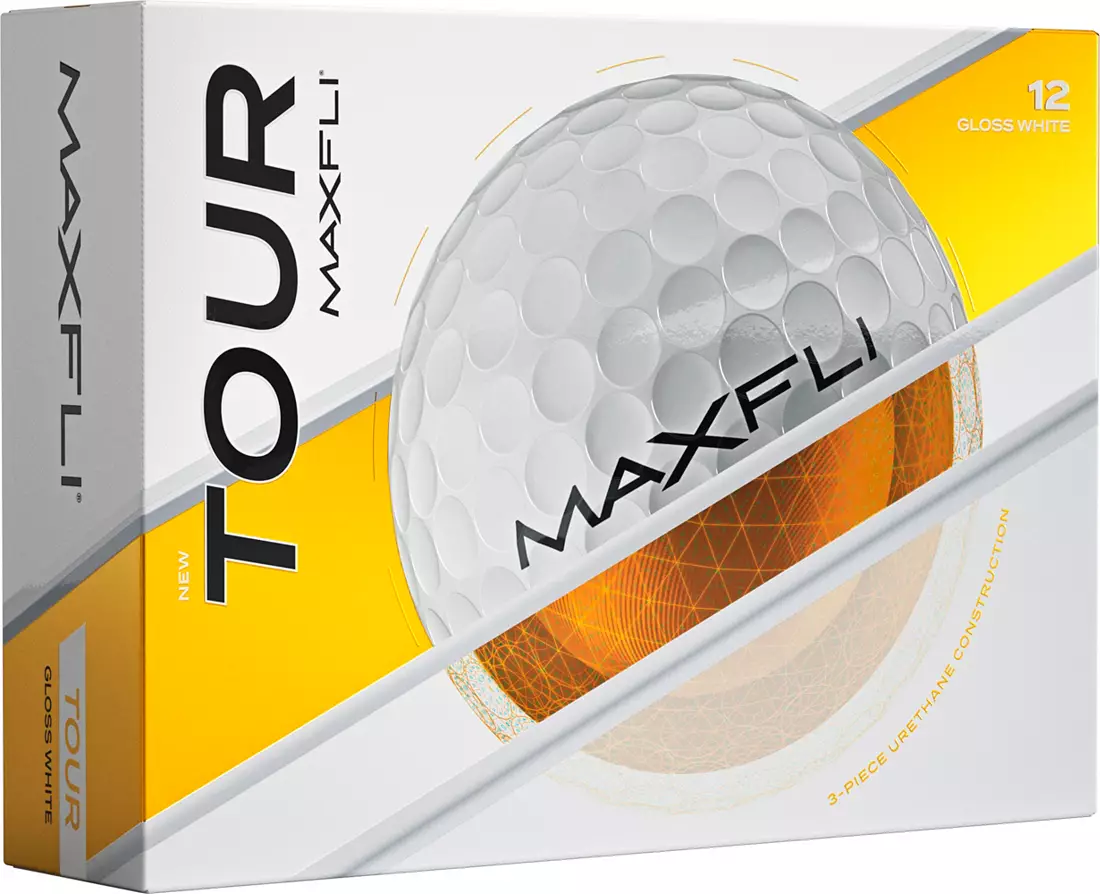
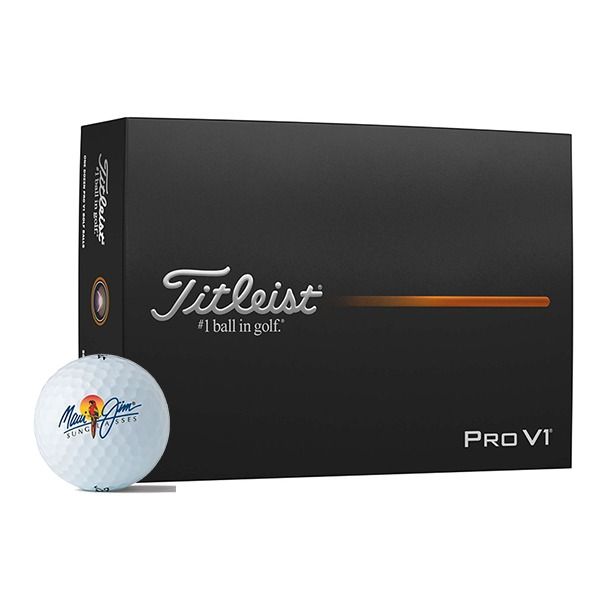
- +Your swing speed is between 80–100 mph
- +Soft feel off the putter is your top priority
- +You want a urethane tour ball without paying $54 a dozen
- +Your handicap is 10 or above
- +You lose more than one ball a round and budget matters
- +Your swing speed is consistently above 95 mph
- +Short-game spin and wedge control are central to your scoring
- +You play in windy conditions and need a consistent low flight
- +Your handicap is below 12 and you can exploit tour ball advantages
- +Durability and round-to-round consistency matter more than price
Specs Comparison
| Spec | Maxfli Tour | Pro V1 |
|---|---|---|
| Construction | 4-piece | 3-piece |
| Compression | ~75 | 90 |
| Cover | Urethane | Urethane |
| Core | Dual-core | ZG Process Dual Core |
| Dimple Count | 322 | 352 |
| Feel | Soft | Soft-Medium |
| Driver Launch | Mid-High | Mid |
| Driver Spin | Mid | Low-Mid |
| Wedge Spin | High | Very High |
| Price (2026) | ~$29/dozen | ~$54/dozen |
Head to Head
Feel
Edge: Maxfli Tour (softness); Pro V1 (feedback)Maxfli Tour
At compression 75, the Maxfli Tour is noticeably softer than the Pro V1. Off the putter it produces a muted, cushioned sensation that golfers who prioritize feel at low speed will enjoy. Off irons it is responsive without being harsh — it communicates impact well for a ball at this price. The 4-piece construction with dual-core design gives the Maxfli Tour a layered feel that punches well above its price point. Golfers who try it expecting a budget ball are consistently surprised.
Pro V1
The Pro V1's compression 90 gives it a firmer, more communicative feel. There is a distinct 'click' at impact — not harsh, but more informative than the Maxfli Tour. Off the putter the Pro V1 is softer than most tour balls but firmer than the Maxfli. Off irons and wedges, the feedback is immediate and tells you exactly where you caught it. For players who use feel as a primary diagnostic tool, the Pro V1's more responsive character is genuinely useful.
Distance
Edge: Pro V1 (100+ mph); Tie (80–100 mph)Maxfli Tour
The Maxfli Tour's lower compression and mid-high launch profile suit the 80–100 mph swing speed range well. In that bracket, it compresses efficiently and produces ball speeds that are competitive with the Pro V1. The slightly higher launch also helps carry distance for players who don't naturally get the ball up. In testing, the Maxfli Tour typically sits within 3–5 yards of the Pro V1 in carry distance for golfers in the 85–100 mph range — a gap that most recreational players would never notice on the course.
Pro V1
The Pro V1 produces a lower, more penetrating ball flight that holds up better in wind and plays more consistently across varying conditions. Its distance advantage over the Maxfli Tour grows above 100 mph, where the Pro V1's firmer compression returns more ball speed. For golfers above 100 mph the Pro V1 is meaningfully longer. For golfers in the 80–95 mph range the gap is small enough to be negligible round-to-round.
Short Game
Edge: Pro V1Maxfli Tour
The Maxfli Tour's urethane cover delivers competitive greenside spin — well above what an ionomer ball can produce, and genuinely close to a mid-range tour ball on chip and pitch shots. From inside 80 yards, the Maxfli Tour bites and checks on approach. Where it gives a little ground is on full wedge shots from 100–130 yards, where the softer compression yields slightly less bite than the Pro V1. For most golfers, the short-game difference between these two balls is smaller than their putting stroke variation.
Pro V1
The Pro V1's urethane elastomer cover is purpose-built for short-game control. On full wedge shots it generates more spin than the Maxfli Tour, producing a higher, steeper descent and sharper check on landing. On chips and pitches the soft cover grips the grooves at low club speed and produces reliable spin. The Pro V1's short-game edge over the Maxfli Tour is real — it is the category where the price premium is most defensible.
Durability
Edge: Pro V1Maxfli Tour
The Maxfli Tour is reasonably durable for a urethane ball, but it scuffs more readily than the Pro V1 on cart paths and hardpan. The softer cover, while excellent for feel and spin, is more vulnerable to cutting on mishits with wedges. A Maxfli Tour typically lasts a full round of play before noticeable cover wear — comparable to most mid-range tour balls. At $29 a dozen, even losing a ball or retiring it after 18 holes costs half what a Pro V1 sleeve does.
Pro V1
The Pro V1's urethane elastomer cover is one of the most durable in the premium category. It resists scuffing better than softer-cover alternatives and typically survives multiple rounds without significant wear — assuming you don't hit too many cart paths. The durability advantage compounds over time: Pro V1s last longer per ball, which partially offsets the price premium for golfers who are careful with their equipment.
The Honest Answer on the Price Gap
At $29 vs $54, the Maxfli Tour costs 46% less than the Pro V1. For that discount to be meaningful, the Pro V1 needs to perform meaningfully better — and for most golfers, it does not.
The Pro V1's real advantages are in short-game spin on full wedge shots, trajectory consistency in wind, and durability. Those are real advantages. But they are only valuable if your game has reached the level where you can consistently exploit them. A 15-handicapper whose wedge distances vary by 15 yards round to round will not notice the Pro V1's spin edge on 100-yard shots.
The Maxfli Tour is where the value equation turns. It is not trying to be a Pro V1 at half price — it is a genuinely good urethane ball that performs well for recreational golfers in the 80–100 mph range. Buy the Maxfli Tour until your game actually demands the Pro V1. You will know when that moment arrives.
Our Verdict
The Maxfli Tour is a genuinely good urethane golf ball. At $29 a dozen it delivers feel, short-game spin, and distance performance that the vast majority of recreational golfers will not be able to distinguish from a $54 Pro V1. The Pro V1 is better — but not $25 per dozen better for most people.
If you are below a 12 handicap, swing above 95 mph, and specifically work on your scoring game, the Pro V1's short-game advantages start to matter. If neither of those is true yet, the Maxfli Tour is the smarter buy. Save the $25 per dozen and put it toward a lesson.
Frequently Asked Questions
Is the Maxfli Tour as good as the Titleist Pro V1?
For most recreational golfers, the Maxfli Tour performs very close to the Pro V1 on distance and feel, and delivers competitive greenside spin from its urethane cover. The Pro V1 has a measurable edge in short-game spin on full wedge shots. Whether that gap is worth $25 more per dozen depends on your handicap and swing speed — for golfers above 90 mph with a handicap below 12, the Pro V1's advantages are worth paying for. Below that, the Maxfli Tour is outstanding value.
What compression is the Maxfli Tour?
The Maxfli Tour has a compression of approximately 75, making it softer than the Pro V1 (compression 90). It suits golfers with swing speeds in the 80–100 mph range particularly well.
Does the Maxfli Tour have a urethane cover?
Yes. The Maxfli Tour has a urethane cover — the same type used on the Pro V1, Chrome Soft, and TP5. At $29 a dozen, it is one of the most affordable urethane golf balls available.
Where can I buy the Maxfli Tour?
The Maxfli Tour is sold exclusively at Dick's Sporting Goods and Golf Galaxy in the United States, both in-store and online. It is not available at other retailers, which is why it is less visible than Titleist or Callaway balls despite its strong performance.
Is the Maxfli Tour good for a mid-handicapper?
Yes — the Maxfli Tour is one of the best value choices for mid-handicappers in the 80–100 mph range. It delivers the urethane feel and spin that a mid-handicapper benefits from, without the $54 Pro V1 price tag. It is a genuine performance upgrade over ionomer balls without being a premium-price commitment.