
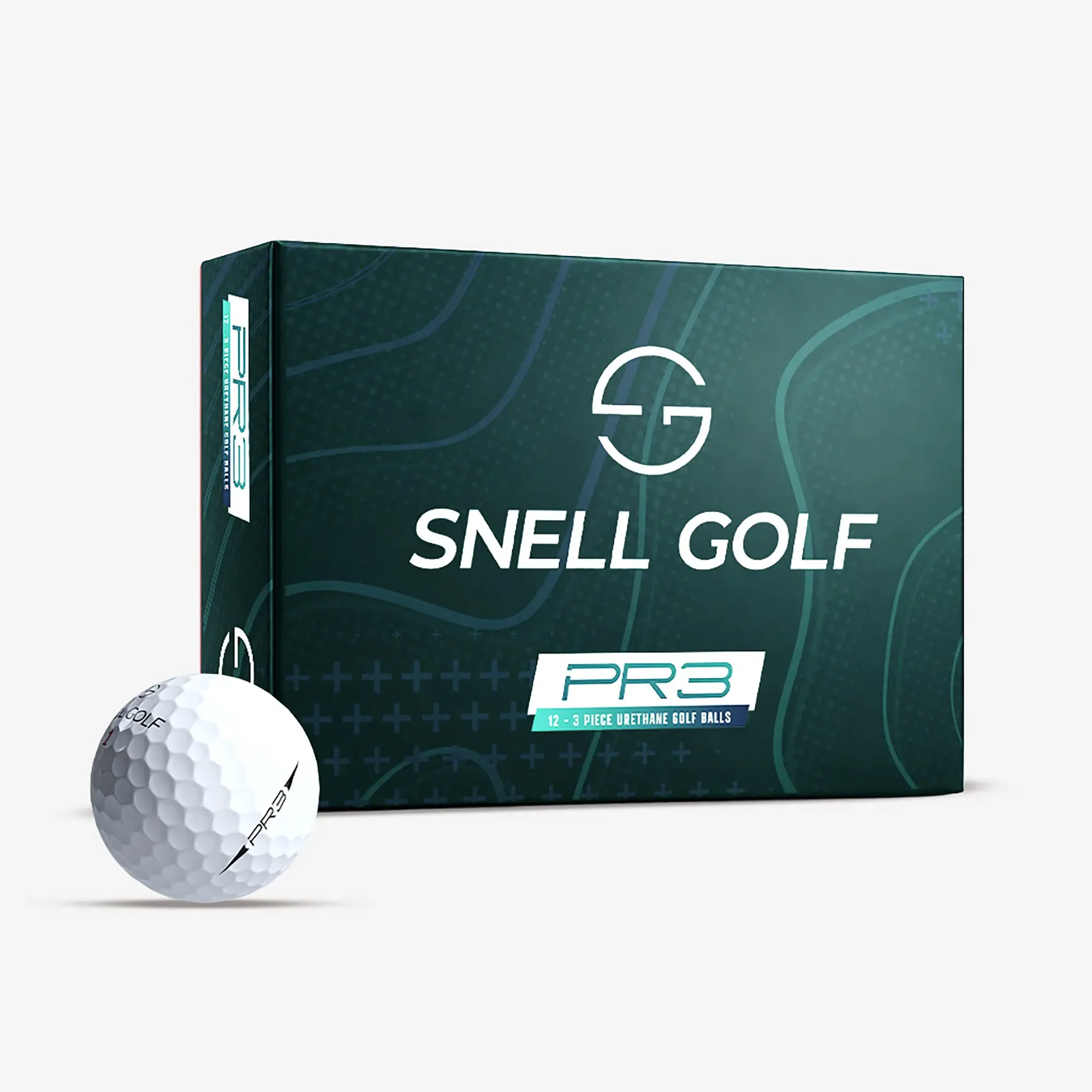
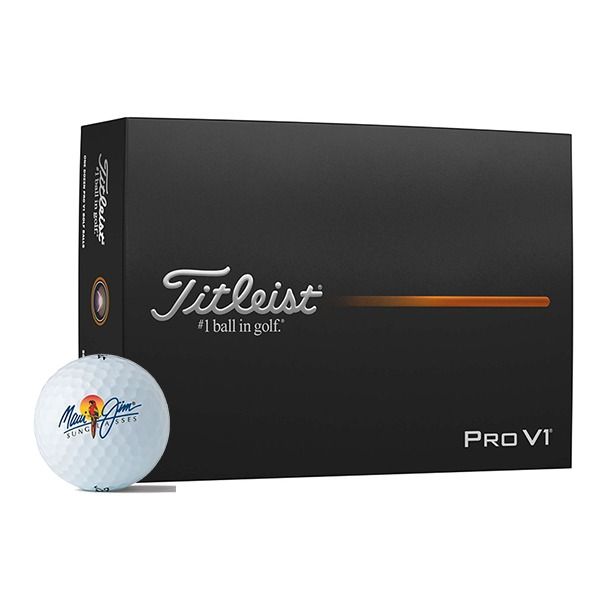
- +You want tour-quality feel at $35 per dozen
- +Your swing speed ranges from 80 to 105 mph
- +You play regularly and go through balls quickly
- +You want a soft-firm feel with urethane short-game control
- +You're comfortable buying direct from snellgolf.com
- +You are a scratch or near-scratch golfer
- +Maximum short-game spin is non-negotiable for your scoring
- +You compete at a level where marginal feel differences matter
- +You want the most widely tested and refined urethane cover
- +Brand consistency and tour validation matters to your game
Who designed the Snell PR3? Dean Snell spent 18 years as a senior engineer at Titleist, working directly on Pro V1 development. He left to build Snell Golf with one premise: manufacture a tour-quality ball and sell it at cost without a retailer in the middle. The PR3 is his 3-piece answer to the Pro V1 — built on the same engineering principles, at nearly half the price per dozen.
Specs at a Glance
| Spec | Snell PR3 | Pro V1 |
|---|---|---|
| Construction | 3-piece | 3-piece |
| Cover | TPU-X Armor Urethane | Urethane |
| Compression | 80–85 | ~90 |
| Feel | Soft-Firm | Soft |
| Driver Spin | Mid | Low-Mid |
| Driver Trajectory | Mid | Low-Mid |
| Wedge Spin | High | Very High |
| Swing Speed Range | 80–105+ mph | 85–105+ mph |
| Price (2026) | $35/dozen | ~$54/dozen |
Head to Head
Feel
Edge: Pro V1 (marginal, mainly on short wedge shots)Snell PR3
At compression 80–85, the PR3 sits squarely in the soft-firm zone that most mid-to-low handicap golfers gravitate toward. It is noticeably more accessible than the PR4 or V1x, and off the putter it has a satisfying, responsive quality that is difficult to distinguish from a premium Titleist in a blind test. The TPU-X Armor urethane cover contributes a tactile feedback on short irons and wedge shots that clearly communicates what the ball is doing through impact.
Pro V1
The Titleist Pro V1 has been refined over two decades specifically around feel. It sits at compression 90 — slightly firmer than the PR3 — and that precision shows in the consistency of its feedback. Off the putter it is soft and responsive. On chip shots and pitches, the urethane elastomer cover provides a distinctive, buttery quality that many golfers describe as the benchmark for how a premium ball should feel. The difference between PR3 and Pro V1 feel is real, but subtle — most golfers playing casual rounds would not tell them apart.
Distance Off the Driver
Edge: Tie (comparable yardages across the shared swing speed range)Snell PR3
The PR3's compression range makes it one of the more versatile tour-quality balls available. At 80 mph of driver swing speed it compresses efficiently and produces a useful mid-trajectory flight with reasonable ball speed. At 100 mph it stays competitive with anything at this price. The PR3 is not a low-spin distance maximizer — that is the PR4's job — but it produces honest, consistent yardages that will satisfy the vast majority of golfers who are not chasing extreme low spin.
Pro V1
The Pro V1 is built for a mid, penetrating ball flight with a lower launch angle than the V1x. Titleist describes it as 'very low long game spin' in their line-up, which in practice means a boring, wind-cheating trajectory that performs exceptionally in real-world conditions. Off the driver it is not the longest ball on the market but it is consistent, predictable, and rewards straight contact. For handicaps of 5–15 who prioritize accuracy over maximum carry, it suits the bill perfectly.
Short Game and Greenside Spin
Edge: Pro V1 (narrow, most evident on delicate chips at scratch level)Snell PR3
The TPU-X Armor urethane cover was engineered for short-game performance, and it delivers. On full wedge shots the PR3 generates high spin with a grabby, consistent bite. On pitch shots from tight lies it responds predictably. The short-game performance here exceeds what most ionomer or cast-urethane balls at similar price points produce, and it comfortably meets the standard that mid-to-low handicap golfers need to score well.
Pro V1
The Pro V1's urethane elastomer cover is the reason it has dominated the world's best players' bags for over 20 years. On short shots — particularly partial wedge strikes and delicate chips — it generates slightly more spin than the PR3 and has a narrower performance window that rewards precise contact with an exceptional response. At the elite end of the game, this matters. For most golfers below tour level, the gap is narrow enough that the PR3 will serve them equally well.
Durability
Edge: PR3Snell PR3
Snell's TPU-X Armor cover is marketed explicitly for durability as well as performance, and early user feedback backs this up. The PR3 holds up well through multiple rounds under typical playing conditions without significant scuffing. For a urethane ball at $35 per dozen, the cover longevity is genuinely good — you are not paying a durability penalty to get the price point.
Pro V1
The Pro V1 is a tour ball and is not optimized for longevity. The soft urethane cover scuffs on contact with cart paths, tree roots, and rough hard surfaces. Professional golfers change balls frequently — often multiple times per round — and the V1 is priced and built for that usage pattern. Weekend golfers who play the same ball for two or three rounds will notice more wear than with a harder-covered ball. At $54 a dozen, replacing them regularly stings.
Value
Edge: PR3 — $19 per dozen, every single orderSnell PR3
At $34.99 per dozen from snellgolf.com, the PR3 is $19 cheaper than the Pro V1. Snell sells direct to consumer — no retailers, no tour endorsement budget, no TV advertising spend — so the price reflects manufacturing and shipping, not overhead. Play once a week with a dozen balls a month and you save $228 per year. Buy two dozen a month and you save $456. That is a meaningful sum that can go toward more range time, a lesson, or better gear.
Pro V1
The Pro V1 costs approximately $54 per dozen and the premium is partly performance, partly brand. Titleist's R&D investment, tour presence, and decades of market leadership are all baked into that number. For a golfer who plays competitively and needs every marginal advantage, the price is defensible. For golfers at handicap 5 or above who play for enjoyment, it is a significant ongoing cost for a performance advantage that may not show up in their scores.
What Does $19 More Per Dozen Actually Buy You?
The Pro V1 costs $54 per dozen. The Snell PR3 costs $35. Play once a week and buy a dozen a month and you are spending $228 more per year to play the Titleist. Over a full season that pays for a swing lesson, a fitting session, or a solid afternoon at a bucket-list course.
What the premium buys you: a marginally softer, more refined feel on delicate short-game shots, the confidence of the most tested urethane cover in the history of golf, and the knowledge that the ball in your bag is trusted by more tour players than any other.
What the premium does not buy you: meaningfully more distance off the driver, a performance gap that will show up in your scores as a mid-handicapper, or better durability — if anything the Pro V1 scuffs faster.
Per Dozen
$19.01 more
Per Month (1 dozen)
$228/year more
Per Month (2 dozen)
$456/year more
Our Verdict
Buy a sleeve of PR3s and play them alongside your regular Pro V1s. Most golfers can't tell them apart.
The feel is close. The spin is close. And the PR3 costs $19 less per dozen — that's real money over a full season.
Where to Buy
Frequently Asked Questions
Is the Snell PR3 as good as the Titleist Pro V1?
In terms of core on-course performance, the PR3 is competitive with the Pro V1 for the vast majority of golfers. Both are 3-piece urethane balls with similar feel profiles and high short-game spin. The Pro V1 has decades of refinement and a slight edge in consistency at the elite level, but at handicap 5 and above the performance difference is difficult to detect in real play.
What swing speed is the Snell PR3 designed for?
The PR3 has a wide sweet spot at compression 80–85, making it accessible from around 80 mph up through 105+ mph. It is suitable for mid- to low-handicap golfers who want a urethane ball without the high-swing-speed requirement of the PR4. If your driver swing speed is above 100 mph and you prioritize low spin off the tee, consider the PR4 instead.
What is the difference between the Snell PR3 and PR4?
The PR3 is a 3-piece ball with compression 80–85, built for a wide range of golfers who want feel and short-game control. The PR4 is a 4-piece ball with compression 85–90, designed specifically for fast swingers who need to reduce driver spin. Both cost $34.99 per dozen. Most mid-handicap golfers will find the PR3 the better fit.
Is it worth paying $19 more per dozen for the Pro V1 over the Snell PR3?
For most golfers, no. Play weekly with a dozen a month and you save $228 a year by switching to the PR3. The performance gap is real but narrow — the Pro V1 premium is justified for scratch or competitive low-handicap golfers who need every marginal advantage in greenside control, but not for the majority of players.
Does the Snell PR3 feel like a Pro V1?
Very similar, but not identical. The PR3 has a soft-firm character at compression 80–85 that most golfers would describe as comparable to the Pro V1. The Pro V1's urethane cover has a fractionally softer, more buttery quality on delicate short-game shots that years of tour feedback have tuned to perfection. In a blind test on a real course, most handicap golfers would be unable to tell them apart.