

What Can You Actually Do With Them on the Course?
🎥
Record Your Swing
First-person 3K video of every shot. Review from address to follow-through. Vanguard's center-mounted camera gives a wider 122° field of view.
🤖
Ask Meta AI
Ask about course conditions, rules, or anything hands-free. Say 'hey Meta' and get answers without touching your phone.
🎵
Audio Through the Round
Stream music, podcasts, or golf GPS yardages through open-ear speakers. Vanguard speakers are 6dB louder with wind-cancelling mics.
⌚
Garmin & Strava (Vanguard only)
Ask for live heart rate, pace, or fitness stats via voice. Real-time updates from your Garmin watch through the Vanguard's speakers.
- +Budget is the priority at $379
- +You want glasses for on and off the course
- +You don't need Prizm or Garmin
- +First-time smart glasses buyer
- +You want Prizm lenses for $20 more
- +Sport frame without full Vanguard price
- +You don't need Garmin or IP67
- +Best value for regular golfers
- +You want IP67 and Garmin integration
- +You want interchangeable Prizm lenses
- +You record every shot and want 122° FOV
- +Best overall golf smart glasses
Specs Comparison
| Spec | Ray-Ban Gen 2 | Oakley HSTN | Oakley Vanguard |
|---|---|---|---|
| Frame Style | Lifestyle | Casual sport | Performance sport |
| Camera | 3K Ultra HD | 3K / temple-mounted | 3K / center-mounted |
| Camera FOV | Standard | Standard | 122° wide |
| Meta AI | Yes | Yes | Yes |
| Lens Tech | Standard / polarized | Prizm | Prizm (interchangeable) |
| Water Resistance | IPX4 | IPX4 | IP67 |
| Audio | 5 speakers | 5 speakers | 5 speakers (+6dB) |
| Battery (active) | Up to 8 hrs | Up to 8 hrs | Up to 9 hrs |
| Garmin / Strava | No | No | Yes |
| HyperLapse Video | No | No | Yes |
| Price | From $379 | From $399 | From $499 |
Head to Head
On-Course Functionality
Edge: VanguardRay-Ban Gen 2
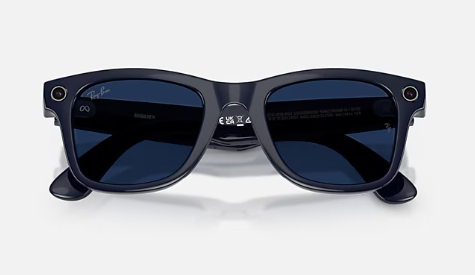
The Ray-Ban Meta Gen 2 records 3K video, runs Meta AI hands-free, and streams GPS yardages through the open-ear speakers. With up to 8 hours of battery, it covers a full round. The temple-mounted camera captures a natural first-person angle of your swing. A versatile setup in a lifestyle frame.
Oakley HSTN
The HSTN matches the Ray-Ban on 3K video, 8-hour battery, and Meta AI. The Prizm lenses are the key upgrade — they enhance the greens and fairway colors you are looking at all round. The temple-mounted camera is the same position as the Ray-Ban. No Garmin integration, but a solid sport-forward package at $399.
Oakley Vanguard
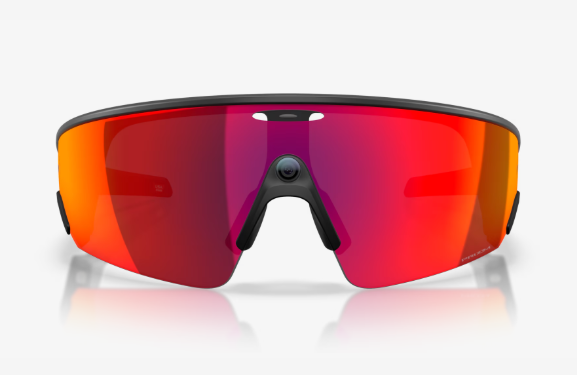
The Vanguard is the most capable of the three. Its center-mounted camera gives a wider 122° field of view for better swing footage. Garmin and Strava integration lets you ask for live stats hands-free. HyperLapse video captures your round. IP67 waterproofing handles any weather. The full performance package.
Lens Quality for Golf
Edge: Vanguard (interchangeable Prizm)Ray-Ban Gen 2
Ray-Ban offers standard, tinted, and polarized lens options. Polarized lenses help with glare off water and cart paths, and the quality is good. What they lack is golf-specific color enhancement — the lenses are general-purpose optics. Adequate for most rounds, but not optimized for the course.
Oakley HSTN
Oakley's Prizm lens technology is a real advantage on the golf course. Prizm Golf lenses are tuned to enhance the greens, browns, and earth tones that dominate a course — making it easier to read fairway contours, track ball flight, and distinguish grass conditions. A meaningful upgrade over standard polarized lenses.
Oakley Vanguard
The Vanguard has the same Prizm technology as the HSTN, plus interchangeable lenses. You can swap between PRIZM 24K, PRIZM Black, PRIZM Road, and PRIZM Sapphire depending on conditions. Replacement lenses cost $85 and click in without tools. The most adaptable optics of the three.
Fit and Comfort
Edge: Vanguard (sport fit)Ray-Ban Gen 2
Multiple lifestyle frame styles — Wayfarer, Headliner, Skyler and others. Comfortable for a full round of casual golf but the frames are not designed for athletic movement. Some golfers find them shifting slightly during the swing. Off the course they look and feel like regular glasses, which is part of the appeal.
Oakley HSTN
The HSTN uses a sport-influenced frame geometry with better grip and a closer fit than the Ray-Ban. It stays more stable through the swing than a lifestyle frame. Designed to bridge everyday wear and sport use — it works on the course and looks presentable in the clubhouse. A good middle ground.
Oakley Vanguard
The Vanguard is built for athletes. A full wraparound sport frame with three hardware buttons — shutter, programmable action, and power — locks in through a driver swing without shifting. Designed for runners and cyclists as much as golfers, so it handles the movement and sweat of a hot round without adjustment. The most secure fit of the three.
Battery Life for 18 Holes
Edge: Vanguard (slight — 9 vs 8 hrs)Ray-Ban Gen 2
Up to 8 hours active — comfortably covers any round. The Gen 2's battery is a major upgrade over the original Ray-Ban Meta and removes battery as a practical concern for golf. The charging case provides additional capacity for back-to-back rounds.
Oakley HSTN
Also up to 8 hours active — identical to the Ray-Ban Gen 2. Both will handle a full round with ease. The HSTN offers no battery advantage over the Ray-Ban at the same price tier. Battery life is not a reason to choose between these two.
Oakley Vanguard
Up to 9 hours — one hour more than the Ray-Ban and HSTN. For a standard round the difference is negligible. Where it matters is all-day range sessions, back-to-back rounds, or very slow five-hour rounds with heavy AI and video use. The Vanguard has a small but real edge.
Value
Edge: Ray-Ban (price), Vanguard (features)Ray-Ban Gen 2
At $379, the Ray-Ban Gen 2 gives you 3K video, 8-hour battery, and Meta AI in a versatile lifestyle frame. The best value if you want glasses that work equally well on and off the course. You give up Prizm lenses, IP67, and Garmin — if those matter to your golf, look at Oakley.
Oakley HSTN
At $399 — just $20 more than the Ray-Ban — the HSTN adds Prizm lenses and a sport frame. That is an easy upgrade for any golfer who plays regularly. The main things you miss vs the Vanguard are IP67, Garmin, interchangeable lenses, and the center-mounted camera. A strong middle option.
Oakley Vanguard
At $499, the Vanguard costs $120 more than the Ray-Ban and $100 more than the HSTN. For that premium you get IP67, Garmin and Strava integration, HyperLapse, interchangeable Prizm lenses, and the wider 122° camera. For a golfer who plays regularly and wants every feature, the Vanguard is worth it.
Our Verdict
For most golfers, the Oakley HSTN at $399 is the sweet spot. Prizm lenses make a real difference on the course, and the sport frame is more comfortable during a round than the Ray-Ban.
The Vanguard at $499 is for serious golfers who want everything — Garmin integration, better waterproofing, interchangeable lenses. Worth it if you'll actually use those features.
The Ray-Ban Gen 2 at $379 is the best pick if you want glasses you'll wear on and off the course. Same AI and audio as the Oakleys — just a lifestyle frame instead of a sport one.
Frequently Asked Questions
What is the difference between the Oakley Meta HSTN and Vanguard?
The Vanguard is the performance-focused model. Key upgrades over the HSTN: IP67 waterproofing (vs IPX4), up to 9-hour battery (vs 8), center-mounted wide-angle camera (vs temple-mounted), Garmin and Strava integration, HyperLapse video, interchangeable Prizm lenses, and louder speakers with wind-cancelling mics. The HSTN is a casual sport frame with Prizm lenses at $100 less. Both beat the Ray-Ban on optics.
Can these glasses track your golf shots?
Not natively. None of the three glasses have built-in shot tracking or GPS. What they all do is record 3K first-person video of each shot for swing review. The Vanguard adds Garmin integration for fitness stats via voice. Third-party golf GPS apps can push audio yardages through any of the three pairs.
Do smart glasses replace a rangefinder?
No. A laser rangefinder gives you precise distance to the pin in under a second. Smart glasses can play audio GPS yardages from your phone, which is less precise. Keep your rangefinder in the bag — these glasses are a supplement for video, audio, and AI, not a replacement for distance measurement.
Is the Oakley HSTN worth $20 more than the Ray-Ban Gen 2?
Yes, for golfers who play regularly. The Prizm lens upgrade alone is worth more than $20 — it genuinely changes how you see the course. The sport frame also holds more securely through the swing than Ray-Ban's lifestyle frames. If you are purely after versatile everyday glasses, the Ray-Ban is fine. If you primarily want performance on the course, the HSTN is the smarter buy.
Is the Oakley Vanguard worth $100 more than the HSTN?
For serious golfers, yes. The Vanguard adds IP67 waterproofing, Garmin and Strava integration, a wider 122° camera angle, HyperLapse video, and interchangeable lenses. If you use a Garmin watch, play in all weather, and want the most capable recording setup, the $100 is justified. If those features are not relevant to how you play, the HSTN delivers nearly the same golf experience for less.