
What Counts as a Slow Swing Speed?
In practical terms, anything under 85 mph with the driver. That covers a large portion of recreational golfers — most women, most senior men, and plenty of male golfers in their 40s and 50s whose tempo has naturally softened over the years. You do not need to be elderly or a beginner to have a slow swing speed.
Below 85 mph, compression matching becomes one of the most impactful equipment decisions you can make. Here's how to match your speed to the right compression range:
| Driver Swing Speed | Recommended Ball | Note |
|---|---|---|
| Under 60 mph | Wilson Duo Soft (29) | Lowest compression available. Most other balls won't compress fully. |
| 60 – 70 mph | Wilson Duo Soft or Callaway Supersoft | Stay under compression 40. Most budget balls are too firm for this range. |
| 70 – 80 mph | Callaway Supersoft, Maxfli SoftFli, Srixon Soft Feel | Compression 35–60 is your sweet spot. Wide selection available. |
| 80 – 85 mph | Srixon Soft Feel, Titleist TruFeel, Bridgestone e6 Soft | You're at the borderline. Low-compression balls still help but mid-range is accessible. |
Why Compression Is the Most Important Spec
Compression is a measure of how much force is required to deform the ball at impact. A Pro V1 has a compression of 90. A Wilson Duo Soft has a compression of 29. The difference is significant.
When you hit a high-compression ball at a slow swing speed, the ball does not compress fully. Instead of deforming and snapping back to launch the ball, it springs off the face prematurely. The energy transfer is inefficient, your distance drops, and the ball feels harder than it should. This is why slower swingers who try tour balls often feel like they're hitting a rock.
A low-compression ball solves this entirely. It deforms easily at contact, transfers energy properly, and produces the launch conditions it was designed to produce — at your swing speed.
What Slow Swing Speed Golfers Should prioritize
Low Compression (under 65)
The foundation. Anything above compression 70 is likely working against you below 85 mph. Most tour balls are 85–100 compression and should be avoided until your swing speed catches up.
High Launch
Slower swing speeds produce lower ball speed, which means less natural carry. A ball that promotes a higher launch angle helps offset this by keeping the ball airborne longer. Low-compression balls generally launch higher.
Straight Ball Flight
Slower tempo players often develop a slice or gentle fade as they age. Balls with aerodynamic dimple patterns engineered to reduce side spin — like Bridgestone's e-series — compound the correction without requiring any swing change.
Durability
You are not playing 5-round tournaments on tour. A durable Surlyn or ionomer cover that survives cart paths, rough lies, and the occasional topped shot is more practical than a delicate urethane cover that scuffs after one round.
The Best Golf Balls for Slow Swing Speeds in 2026
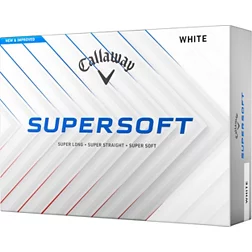
Callaway Supersoft
Best for: Slow swing speeds of any age, maximum forgiveness, straight flight
Compression
38
Cover
Trionomer
Construction
2-piece
Dimples
332
The Supersoft is the easiest recommendation for a slow swing speed, and I say that after testing pretty much every soft ball on the market over the past several years. Callaway engineered this ball specifically around low compression, and at 38 it compresses fully at swing speeds as low as 55 mph. That means proper energy transfer, the distance you're supposed to get, and a genuinely soft feel — not the hard clunk you get when a fast-swing ball doesn't compress. The HEX Aerodynamics dimple pattern also does real work keeping ball flight stable on mis-hits. At $22 a dozen, losing one doesn't sting.
Pros
- +Compression 38 suits any swing speed under 90 mph
- +Reduces side spin for noticeably straighter flight
- +Soft feel off the putter and all short-game shots
- +Affordable enough to play without anxiety about losing one
Cons
- -Minimal greenside spin — not built for tour-level short game
- -Ionomer cover scuffs faster than urethane
Wilson Staff Duo Soft
Best for: Swing speeds under 65 mph — the softest tour-quality ball in production
Compression
29
Cover
Ionomer
Construction
2-piece
Dimples
302
The Duo Soft has the lowest compression of any golf ball currently in production, and that matters more than most people realize. If your swing speed is consistently under 65 mph, a compression-60 ball is already borderline too firm to compress fully at impact. You are leaving distance on the table on every drive. A compression-29 ball eliminates that entirely — it deforms easily at contact, transfers energy the way it was designed to, and produces the launch and feel the ball is built for. For senior golfers or anyone with a naturally slower, smoother tempo, this is the most honest equipment recommendation I can make. Wilson's quality is underrated and the price is the best on this list.
Pros
- +Lowest compression of any production ball at 29
- +Generates proper distance even at swing speeds under 65 mph
- +Extremely soft feel on all shots
- +Cheapest ball on this list — excellent value
Cons
- -Slightly lower trajectory than firmer options
- -Not ideal if your swing speed is above 80 mph
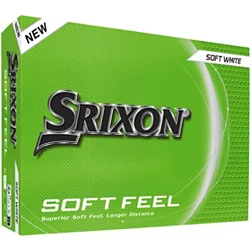
Srixon Soft Feel
Best for: Slow swingers who want better-than-expected quality at a budget price
Compression
60
Cover
Ionomer
Construction
2-piece
Dimples
338
Srixon is a full tour-level brand that sponsors PGA Tour players, manufactures their own tour balls, and brings that quality control to every price tier. The Soft Feel is their entry-level option and it performs noticeably better than the price suggests. The 338-dimple aerodynamic cover produces a more stable, consistent ball flight than most budget balls, the core generates real spring for moderate swing speeds, and the feel off the putter is soft and responsive. For slow swingers in the 70-85 mph range who want a genuine quality ball at $20 a dozen, this is the best value on the market.
Pros
- +Noticeably better quality than the price implies
- +338-dimple pattern gives consistent, stable ball flight
- +Good feel off the putter and irons
- +One of the most affordable playable balls available
Cons
- -Compression 60 may be slightly too firm for swing speeds under 65 mph
- -No greenside spin performance
Maxfli SoftFli
Best for: Golfers who prioritize feel above everything else
Compression
35
Cover
Ionomer
Construction
2-piece
Dimples
392
The SoftFli has the highest dimple count on this list at 392, and you can feel it in the flight — shots hold their line in a crosswind better than most budget balls and the trajectory is more consistent. Compression of 35 puts it right alongside the Supersoft in terms of softness, but the SoftFli has a slightly different feel character: a touch more muted and buttery off the putter, which a lot of slower-swing golfers prefer on the greens. If feel is your number one priority and price is secondary, the SoftFli is hard to beat. Widely available at Dick's Sporting Goods.
Pros
- +392-dimple pattern produces exceptionally stable ball flight
- +Compression 35 suits slow swing speeds perfectly
- +Premium feel for the price tier — especially off the putter
- +Consistent flight in windy conditions
Cons
- -Less widely available online than Callaway or Titleist
- -Minimal greenside spin control
Titleist TruFeel
Best for: Slow swingers who want Titleist consistency without the Pro V1 price
Compression
60
Cover
TruFlex
Construction
2-piece
Dimples
376
Titleist makes the most consistent golf balls in the world at every price point. The TruFeel is their entry-level option and it carries the same quality control and manufacturing precision as the Pro V1 — just with a TruFlex ionomer cover instead of urethane, and without the multi-layer construction. The 376-dimple pattern reduces side spin for a straighter flight, and the feel at this price tier is noticeably better than most budget alternatives. If the Titleist name means something to you, or you simply want the most consistent ball in the sub-$30 category, the TruFeel is the one to buy.
Pros
- +Titleist quality control and consistency at a fraction of the Pro V1 price
- +376-dimple cover reduces side spin for straighter flight
- +Better feel than most ionomer balls at this price
- +Reliable, consistent performance round after round
Cons
- -Slightly firmer than Supersoft or Duo Soft at compression 60
- -No urethane short-game performance
Bridgestone e6 Soft
Best for: Slow swingers who also struggle with a slice or sideways miss
Compression
50
Cover
Surlyn
Construction
2-piece
Dimples
326
Bridgestone engineered the e6 line around one specific problem: side spin. The 326-dimple Surlyn cover and core design actively reduce the side spin that causes the slices and hooks that plague most recreational golfers — and that problem doesn't go away just because your swing speed dropped. If you're a slower swinger who also fights a chronic curve off the tee, the e6 Soft gives you both a soft compression and genuine directional correction in a single ball. That combination is harder to find than it sounds. The Surlyn cover is also one of the most durable on this list.
Pros
- +Engineered specifically to reduce side spin and straighten ball flight
- +Compression 50 suits swing speeds of 65-80 mph comfortably
- +Very durable Surlyn cover survives cart paths and mis-hits
- +Soft feel suitable for slower tempo players
Cons
- -Not the longest option if distance is your priority
- -Minimal greenside performance
Quick Comparison
| Ball | Compression | Cover | Best For | Price |
|---|---|---|---|---|
| Callaway Supersoft | 38 | Trionomer | Best Overall | ~$22/dozen |
| Wilson Staff Duo Soft | 29 | Ionomer | Best for Very Slow Swings | ~$19/dozen |
| Srixon Soft Feel | 60 | Ionomer | Best Value | ~$20/dozen |
| Maxfli SoftFli | 35 | Ionomer | Softest Feel | ~$22/dozen |
| Titleist TruFeel | 60 | TruFlex | Best Titleist Option | ~$25/dozen |
| Bridgestone e6 Soft | 50 | Surlyn | Best for Straight Flight | ~$22/dozen |
Frequently Asked Questions
What is considered a slow golf swing speed?
Generally, anything under 85 mph with the driver. Senior men typically average 70–80 mph. Women average 60–70 mph. If you swing under 85 mph, compression matching becomes one of the most impactful equipment decisions you can make — more so than shaft flex or driver head design.
Will a lower compression ball add distance for a slow swing speed?
Yes, often by a meaningful amount. If you're currently playing a compression-90 tour ball at 75 mph swing speed, switching to a compression-38 ball like the Callaway Supersoft can add 10–20 yards of carry distance because the ball is finally compressing fully and returning energy efficiently. It is one of the few equipment changes with a near-guaranteed distance payoff.
Can a slow swing speed golfer use the Pro V1?
Technically, but they will not get the performance they are paying for. The Pro V1 at compression 90 requires a swing speed above 90 mph to compress properly. Below that, you get a harder feel, reduced distance, and no benefit from the urethane short-game performance. You are paying $54 a dozen for a ball that is actively working against your game.
What is the best golf ball for a senior golfer?
For most senior golfers, the Wilson Staff Duo Soft (compression 29) or the Callaway Supersoft (compression 38) are the two best options. Both compress fully at swing speeds as low as 55–60 mph, produce high launch for more carry distance, and have a soft feel that suits the slower tempo of most senior swings. The Duo Soft is the call for swing speeds under 65 mph; the Supersoft is better in the 65–80 mph range.
Should I use a ladies ball or a senior ball if my swing speed is low?
Labels like 'ladies' and 'senior' on golf balls are largely marketing. What actually matters is compression. A ball labeled 'ladies' is usually compression 40–60, which is right for most slow swing speeds. A ball labeled 'senior' is similar. Focus on the compression number rather than the label — and choose the ball that matches your measured or estimated swing speed regardless of what it says on the box.