
- +Your swing speed is between 95–105 mph
- +You want tour-level performance at $35/dozen
- +You play regularly and go through balls quickly
- +You want a firm but not punishing feel
- +You're happy to buy direct from snellgolf.com
- +Your swing speed is consistently above 105 mph
- +You are a scratch or plus-handicap player
- +Maximum greenside spin is non-negotiable
- +You want the most refined urethane cover available
- +Brand and tour pedigree matter to your game
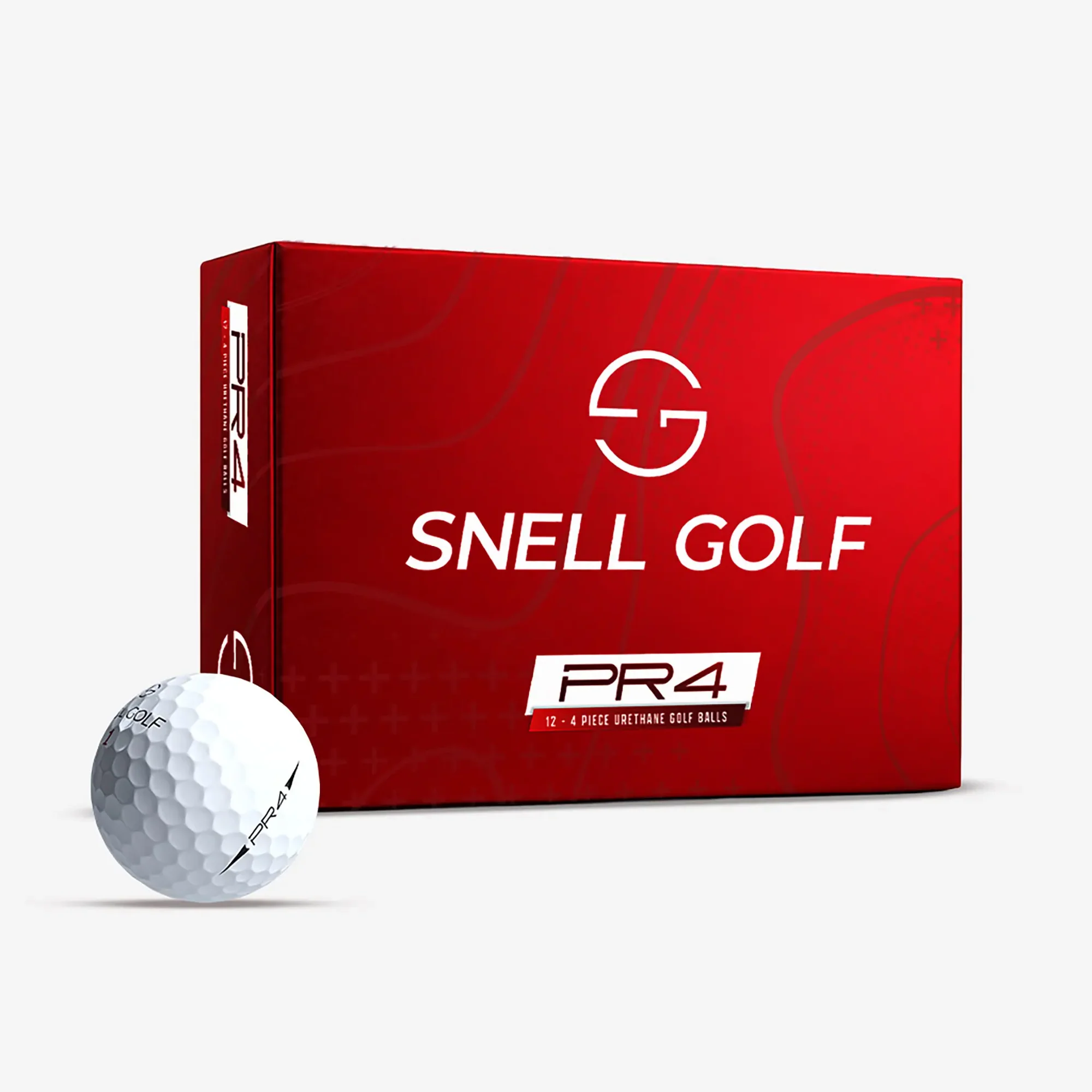
Who designed the Snell PR4? Dean Snell spent 18 years as a senior engineer at Titleist, where he worked directly on Pro V1 development. He left to start Snell Golf specifically to build tour-quality balls and sell them without a retail middleman. The PR4 is his latest work — and it is built to compete with, not merely approximate, the Pro V1x.
Specs at a Glance
| Spec | Snell PR4 | Pro V1x |
|---|---|---|
| Construction | 4-piece | 4-piece |
| Cover | TPU-X Armor Urethane | Urethane |
| Compression | 85–90 | 100 |
| Feel | Firm | Very Firm |
| Driver Spin | Low | Low-Mid |
| Driver Trajectory | Mid-High | High |
| Wedge Spin | High | Very High |
| Target Swing Speed | 95+ mph | 100+ mph |
| Price (2026) | $35/dozen | ~$54/dozen |
Head to Head
Feel
Edge: PR4 (wider sweet spot), V1x (maximum firmness)Snell PR4
At compression 85–90, the PR4 is firm — this is not a soft ball — but it is meaningfully more accessible than the Pro V1x. Players who have struggled to compress a V1x fully will find the PR4 rewards a slightly wider range of swing speeds with better energy transfer. Off the putter it has a crisp, direct response that most fast-swing golfers will find familiar.
Pro V1x
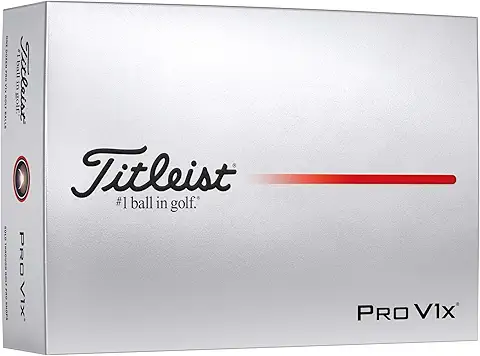
The Pro V1x at compression 100 is one of the firmest balls in golf. It is deliberately designed that way: Titleist built it for tour players who generate elite swing speeds and want the stiffest possible response at high impact forces. Off the putter it is firm and precise. For some golfers this is exactly what they want; for others it crosses into 'too hard.'
Distance Off the Driver
Edge: Tie (PR4 for 95–105 mph, V1x for 105+ mph)Snell PR4
The PR4's dual high-energy mantles are specifically engineered to minimize driver spin and maximize ball speed for fast swingers. In that window — 95 to 105 mph — the low spin profile produces a penetrating, efficient flight. The lower compression relative to the V1x means it compresses more fully for a slightly wider range of swing speeds, which can actually work in its favor for players just under the V1x sweet spot.
Pro V1x
The Pro V1x generates a higher launch angle and is optimized for swing speeds above 100 mph where its compression is fully exploited. For golfers consistently swinging at 105 mph or more, the higher trajectory and Titleist's refined core construction deliver maximum carry. Below 100 mph, the V1x's firmness starts to work against you — you can't compress it efficiently and you give up both distance and feel.
Short Game and Greenside Spin
Edge: Pro V1x (marginal, only detectable at scratch level)Snell PR4
The TPU-X Armor urethane cover was engineered specifically for short-game control. On full wedge shots the PR4 delivers high spin and a responsive, grabby feel through the grooves. On pitch shots and chips it gives genuine tour-level feedback. The vast majority of golfers — including most low handicappers — will find it fully meets their greenside needs.
Pro V1x
Titleist's urethane elastomer cover has been refined through over 20 years of tour feedback and is arguably the benchmark in golf for greenside spin. The Pro V1x generates slightly more spin on partial wedge shots and has a fractionally more precise response on delicate chip shots close to the green. The difference is real but narrow — and only a scratch-level short game is likely to notice it consistently.
Durability
Edge: PR4Snell PR4
Snell markets the TPU-X Armor cover as specifically engineered for durability without sacrificing spin. Early user reports suggest it holds up well through multiple rounds without significant scuffing. For a urethane ball at this price point, durability is genuinely impressive — the cover does not appear to sacrifice longevity for performance.
Pro V1x
The Pro V1x is a tour ball and tour balls are not built for longevity — they are built for peak performance and replaced frequently. The urethane cover will scuff and cut if it makes contact with cart paths, trees, or rough concrete. Competitive players typically replace V1x balls after 18 holes. At $54 a dozen, that habit gets expensive quickly.
Value
Edge: PR4 — not even closeSnell PR4
At $34.99 per dozen, the PR4 is $19 cheaper per dozen than the Pro V1x. Play weekly and buy one dozen a month and that is $228 saved per year. Play more frequently and the gap is even larger. Snell sells direct to consumer with no retailer margin, no tour endorsement budget, and no marketing spend — the entire price difference is overhead, not performance.
Pro V1x
At ~$54 per dozen, the Pro V1x carries a premium that reflects Titleist's brand position, tour infrastructure, and R&D investment as much as it reflects pure ball performance. You are paying for the most recognizable name in golf balls, decades of refinement, and the knowledge that every tour player has access to the same ball you are playing. Whether that is worth $19 more per dozen is a personal calculation.
What Does $19 More Per Dozen Actually Buy You?
Let's be direct about this. The Pro V1x costs $54 per dozen. The Snell PR4 costs $35. If you play once a week and go through a dozen balls a month, you are paying $228 more per year to play the V1x. Over a full season that is a new driver shaft, a fitting session, or two rounds at a nice course.
What the premium buys you: a marginally more refined greenside feel at the elite end of short-game play, a slightly higher launch trajectory optimized for 105+ mph swing speeds, and the confidence of playing the ball that has been winning on tour for over two decades.
What the premium does not buy you: a meaningfully longer drive, a significantly better feel for most golfers, or a ball that will statistically lower your scores if you are a mid-to-low handicap player.
Per Dozen
$19.01 more
Per Month (1 dozen)
$228/year more
Per Month (2 dozen)
$456/year more
Our Verdict
The PR4 is the smarter buy for most golfers. At $35 versus $54, the performance gap doesn't come close to matching the price gap.
Try a sleeve of each in the same round. Most players can't tell them apart on the course.
Where to Buy
Frequently Asked Questions
Is the Snell PR4 as good as the Titleist Pro V1x?
In terms of core performance for a fast swinger, the PR4 is remarkably close. Both are 4-piece urethane balls with low driver spin and high short-game control. The Pro V1x has a marginal edge in greenside spin refinement, but for most golfers the performance gap does not justify the $19/dozen premium.
What swing speed is the Snell PR4 designed for?
The PR4 is designed for higher swing speed players — broadly those with driver swing speeds above 95–100 mph. The 85–90 compression range means the ball requires a faster swing to compress fully. Slower swingers should consider the Snell PR3 instead, which has a compression of 80–85 and a wider performance range.
Does the Snell PR4 have as much greenside spin as the Pro V1x?
Very close, but the Pro V1x has a small edge. Titleist's urethane cover has been refined over more than 20 years of tour feedback. The PR4's TPU-X Armor cover is excellent and will satisfy the short-game needs of the vast majority of golfers, but a scratch player who demands maximum greenside bite may notice a slight difference on delicate chip shots.
Is it worth paying $19 more per dozen for the Pro V1x over the Snell PR4?
For most golfers, no. Play weekly and buy a dozen a month and you spend $228 more per year on the V1x. The performance gap is real but narrow — the V1x premium makes sense for competitive low-handicappers at the elite level, but not for the average fast-swinging golfer.
What is the difference between the Snell PR3 and PR4?
The PR3 is a 3-piece ball with compression 80–85, designed for a wide range of swing speeds. The PR4 is a 4-piece ball with compression 85–90, specifically built for higher swing speed players who want lower driver spin and maximum distance. Both use the TPU-X Armor urethane cover and cost the same $34.99 per dozen.