Our Picks at a Glance
| Ball | Best for | Compression | Price | |
|---|---|---|---|---|
Best Overall Callaway Supersoft | Under 90 mph | 38 | ~$28/dozen | Buy → |
Best Value Srixon Soft Feel | 70–95 mph | 60 | ~$25/dozen | Buy → |
Best Premium Pick Snell Get Sum | 75–100 mph | 75 | ~$30/dozen | Buy → |
Best Feel Titleist TruFeel | 70–95 mph | 62 | ~$30/dozen | Buy → |
Best for Slow Swing Speeds TaylorMade Soft Response | Under 85 mph | 35 | ~$28/dozen | Buy → |
Best for Reducing Slice Bridgestone e6 | 70–95 mph | 65 | ~$28/dozen | Buy → |
What High Handicappers Should Look for in a Golf Ball
Low compression (under 75)
Compression measures how much the ball deforms at impact. A high-compression ball needs a fast swing to compress properly — at moderate speeds it springs back before you transfer full energy. A low-compression ball (38–70) compresses fully at 70–95 mph swings, producing better distance and a softer feel.
Two-piece construction
Two-piece balls have a large core and a single cover layer. They produce low spin off the driver — which reduces the severity of slices and hooks — and are more durable than multi-layer tour balls. For a high handicapper, low spin off the tee is almost always a benefit.
Soft ionomer cover
Ionomer covers are more durable than urethane (tour ball) covers and produce lower spin on full shots — helpful for reducing side spin on mishits. The trade-off is less greenside spin control, but that is a trade-off most high handicappers should happily make.
Price: $25–35 per dozen
A high handicapper who loses 3–4 balls per round spending $55 on Pro V1s is wasting money. At $25–35 per dozen you get excellent two-piece construction that performs better for your swing speed than tour balls. Save the premium ball money for when your handicap drops below 10.
The Six Best Golf Balls for High Handicappers
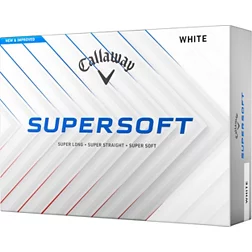
1. Callaway Supersoft
2-piece · Compression 38 · Ionomer cover · ~$28/dozen
The Supersoft is the most popular golf ball in the world for a reason. At compression 38 it is one of the softest balls available — it compresses fully at moderate swing speeds to maximise distance without needing a fast swing. The HEX aerodynamics reduce drag and promote a higher, more stable flight. For a beginner or high handicapper who wants a ball that goes far, feels soft, and doesn't punish mishits, the Supersoft is the default choice.
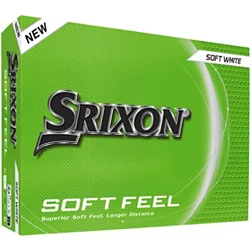
2. Srixon Soft Feel
2-piece · Compression 60 · Ionomer cover · ~$25/dozen
The Soft Feel punches well above its price point. Srixon's 338-speed dimple pattern gives it a more penetrating, consistent flight than most balls in its category, and the soft ionomer cover produces a better feel around the greens than the Supersoft. At ~$25 a dozen it is the best value soft ball on the market — a high handicapper who loses a few balls per round gets the most performance per dollar here.
3. Snell Get Sum
2-piece · Compression 75 · Ionomer cover · ~$30/dozen
Dean Snell (the engineer behind the Pro V1) designed the Get Sum specifically as a high-performance alternative to tour balls for recreational golfers. The two-piece construction gives low driver spin for straighter flight and a soft ionomer cover for feel without the premium price. At compression 75 it suits a wider swing speed range than the Supersoft and gives noticeably better feedback on chip and pitch shots. For a golfer who wants to step up from a basic soft ball without paying tour-ball prices, the Get Sum is the right move.
4. Titleist TruFeel
2-piece · Compression 62 · TruFlex cover · ~$30/dozen
The TruFeel is Titleist's entry-level ball and it delivers the best feel of any ball in this guide. The TruFlex cover gives a noticeably softer, more responsive sensation at impact than standard ionomer — especially on putts and short chips. For a golfer who cares about feel around the greens and wants to play a Titleist without paying Pro V1 prices, the TruFeel is the pick. It is not the longest ball here, but it is the most satisfying to hit.
5. TaylorMade Soft Response
3-piece · Compression 35 · Ionomer cover · ~$28/dozen
The Soft Response is a three-piece ball at the compression of a two-piece — unusual and deliberate. TaylorMade built it to give slower swingers better energy transfer than ultra-soft two-piece balls while adding a mantle layer for slightly better spin separation. The result is the best performing ball in this guide for swing speeds under 85 mph. Senior golfers and beginners who have lost distance off the tee will notice the difference immediately.
6. Bridgestone e6
2-piece · Compression 65 · Surlyn cover · ~$28/dozen
The e6 is purpose-built to reduce side spin — the cause of slices and hooks. Its Delta Dimple pattern and low-spin core promote a straighter flight on off-center hits by dampening the side spin that an open or closed face creates at impact. For a high handicapper who loses balls right every round, the e6 will keep more shots in play. It is not the softest ball here, but the straight-flight benefit outweighs the feel trade-off for a chronic slicer.
Top picks — quick links
Frequently Asked Questions
What golf ball should a high handicapper use?
High handicappers should use a low compression, two-piece golf ball with a soft ionomer cover. These balls compress more easily at slower swing speeds, producing more distance, and their low spin reduces the effect of a poor swing — slices and hooks are less severe. Good options include the Callaway Supersoft, Srixon Soft Feel, and Titleist TruFeel. Avoid tour balls (Pro V1, TP5) — their high compression and spin amplify mishits rather than forgiving them.
What compression golf ball is best for a beginner?
Beginners should look for a compression rating between 50 and 75. At typical beginner swing speeds (60–85 mph), a ball in this range compresses properly at impact to produce the best distance and feel. Ultra-low compression balls (below 50, like the Wilson Duo Soft) are fine for very slow swingers. Avoid anything above 90 compression — high-compression tour balls need 100+ mph to perform as designed.
Are expensive golf balls worth it for high handicappers?
No. Tour balls like the Pro V1 ($55+ per dozen) are designed for swing speeds above 100 mph and prioritise spin control that high handicappers cannot use. A high handicapper hitting a Pro V1 gets more side spin on mishits — meaning bigger slices and hooks — and loses distance versus a softer ball. A $25–35 dozen soft ball like the Srixon Soft Feel or Callaway Supersoft will produce better results for most recreational golfers.
What is the best golf ball for a slow swing speed?
For swing speeds below 80 mph, the best golf balls are ultra-low compression models: the Callaway Supersoft (compression 38), TaylorMade Soft Response (compression 35), or Srixon Soft Feel (compression 60). These compress fully at slower speeds to maximise energy transfer and distance. The Snell Get Sum is also a strong option — a premium two-piece construction at a mid-range price that performs well for moderate swing speeds.
How is Snell Get Sum different from the Pro V1?
The Snell Get Sum is a two-piece, low-compression ball designed for recreational golfers — soft feel, low spin off the driver, and forgiving on mishits. The Pro V1 is a three-piece, high-compression tour ball built for swing speeds above 100 mph with prioritised spin control around the greens. For a high handicapper, the Get Sum produces better distance and straighter flight. The Pro V1 amplifies mishits and its premium pricing ($55+ per dozen) is wasted on a player who loses several balls per round.