
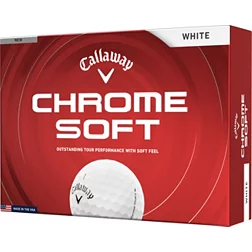
- +Your swing speed is between 75–95 mph
- +You want the softest possible putter feel
- +You play most of your golf in calm conditions
- +You want to save $6 per dozen over the TP5
- +Soft, forgiving feel across all shot types is your priority
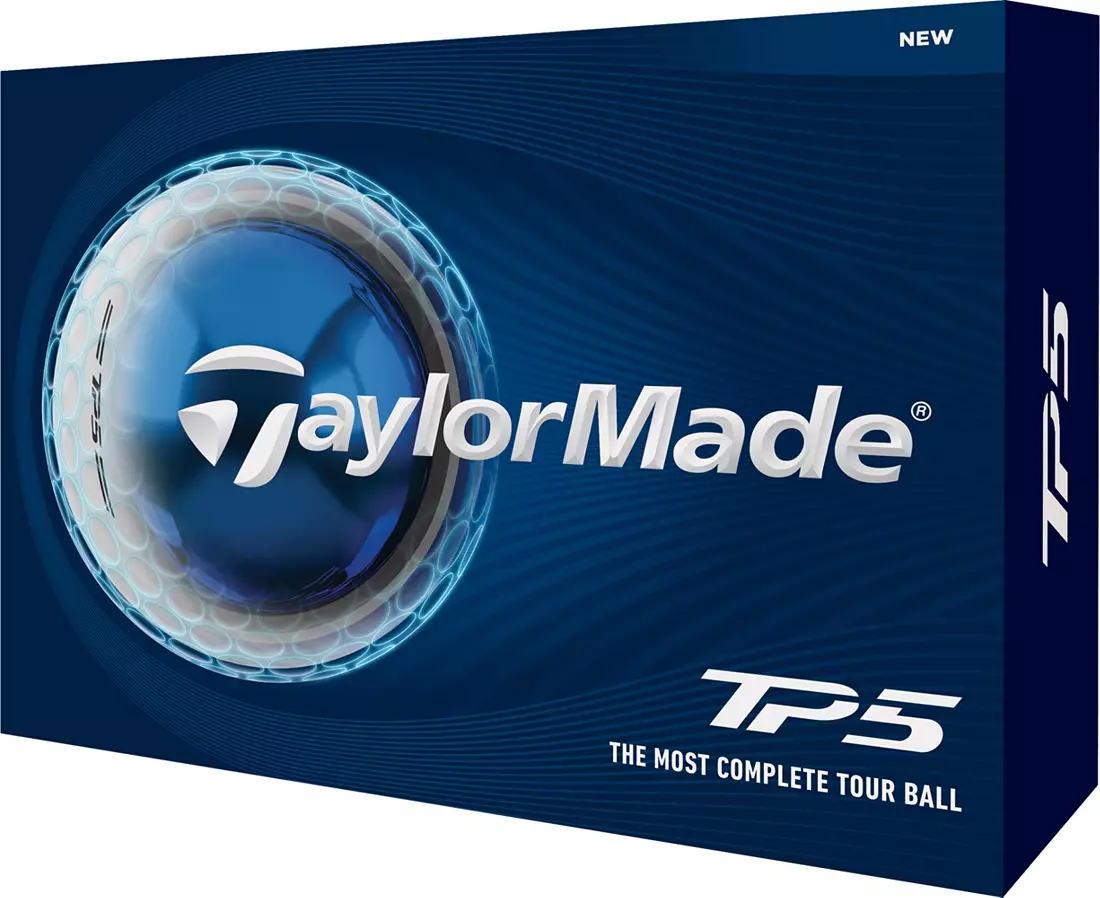
- +Your swing speed is between 90–115 mph
- +You want soft feel with better short-game spin
- +You are improving and want a ball with a higher performance ceiling
- +You prefer a more responsive, communicative feel off irons
- +You play in wind and want a more stable ball flight
Specs Comparison
| Spec | Chrome Soft | TP5 |
|---|---|---|
| Compression | 65 | 85 |
| Construction | 4-piece | 5-piece |
| Cover | Urethane | Urethane |
| Core | Graphene Dual SoftFast | HFM (High Flex Material) |
| Dimple Count | 332 | 322 |
| Feel | Very Soft | Soft |
| Driver Trajectory | Mid-High | Mid-High |
| Driver Spin | Mid | Mid |
| Wedge Spin | High | Very High |
| Price (2026) | ~$48/dozen | ~$54/dozen |
Head to Head
Feel
Edge: Chrome Soft (softest feel); TP5 (more feedback)Chrome Soft
The Chrome Soft is one of the softest premium golf balls available. At compression 65, it compresses easily across the full range of swing speeds and produces a cushioned, muted sensation that golfers who prioritize softness consistently rate as best-in-class. Off the putter it feels almost pillowy — there is minimal feedback from the face, which some players love and others find masks information. Off irons and wedges it is distinctly soft. If you want to feel like you are controlling the ball rather than fighting it, the Chrome Soft is the ball.
TP5
The TP5's compression 85 puts it in between the Chrome Soft and a firmer tour ball like the Pro V1. It is noticeably softer than the Pro V1 but meaningfully firmer than the Chrome Soft. Off the putter there is more click and feedback — a more communicative sensation that tells you more about where you contacted the ball. Off irons it is responsive without being harsh. Golfers who want a 'soft tour ball' but find the Chrome Soft too mushy often land on the TP5 as the right compromise.
Distance and Swing Speed Fit
Edge: Chrome Soft (75–95 mph); TP5 (95–115 mph)Chrome Soft
The Chrome Soft's low compression is its primary swing speed fit tool. At 65 compression, it is optimized for golfers in the 75–100 mph range — it compresses efficiently at those speeds and produces good ball speed and carry. Above 105 mph, the core becomes too soft to return maximum ball speed and distance starts to suffer. For slower swingers and average recreational golfers, the Chrome Soft is genuinely one of the longer premium ball options available.
TP5
The TP5's 5-piece HFM construction produces its best distance in the 85–105 mph range. The High Flex Material layer generates excellent energy transfer at those speeds, and the mid-high launch profile promotes carry. The extra 20 compression points over the Chrome Soft means the TP5 also performs well at 105–115 mph, making it relevant for a wider swing speed range. For golfers above 100 mph, the TP5 is typically the longer ball.
Short Game
Edge: TP5Chrome Soft
The Chrome Soft's urethane cover produces high greenside spin on all shot types. On chips and pitches from inside 80 yards it grips well and stops reliably. Where it gives a little ground to the TP5 is on full wedge shots from 100+ yards, where the softer compression generates slightly less peak spin than a firmer urethane ball. For most recreational golfers, the short-game performance of the Chrome Soft is more than sufficient — it is only under detailed launch monitor scrutiny that the gap to firmer tour balls becomes apparent.
TP5
The TP5's 5-piece construction is specifically designed to separate driver ball speed from short-game spin. The outer layers engage differently at wedge speed versus driver speed, producing very high wedge spin while maintaining mid spin off the driver. In testing, the TP5 consistently generates more full-wedge spin than the Chrome Soft. For players whose scoring depends on stopping approach shots quickly, the TP5's short-game edge is real and repeatable.
Who Each Ball Is For
Edge: Chrome Soft (75–95 mph, value, feel); TP5 (95–110 mph, short game, performance ceiling)Chrome Soft
The Chrome Soft is the right ball for golfers who want a premium feel at moderate swing speeds. If your priority is a soft putter sensation, straight flight, and easy compression — and your swing speed is between 75 and 100 mph — the Chrome Soft delivers all of that for $6 less than the TP5. It is also the better choice for golfers who play in calm conditions most of the time, where its mid-high launch is an asset rather than a liability.
TP5
The TP5 is the right ball for golfers who want soft feel with a higher performance ceiling. At 85–110 mph, it produces better distance than the Chrome Soft and better short-game spin. For golfers who are improving and want a ball that will still perform well as their swing speed increases, the TP5 is the more durable choice — it does not become the wrong ball as quickly as the Chrome Soft does when speed climbs.
Our Verdict
These two balls are not really competing for the same golfer. The Chrome Soft is the softest premium ball available and is purpose-built for feel and forgiveness at 75–100 mph. The TP5 is a more performance-oriented ball that happens to be soft for its class — and it stays competitive at swing speeds where the Chrome Soft starts to give back ball speed.
Under 90–95 mph: Chrome Soft is the longer, softer, better-value option. Above 95 mph: the TP5 is the better performer and the $6 premium is easily justified. If you are right on the boundary, try both — but the swing speed rule holds for most golfers.
Frequently Asked Questions
Is the Chrome Soft or TP5 softer?
The Chrome Soft is softer. At compression 65, it is meaningfully softer than the TP5's compression 85. The difference is noticeable off the putter and on chip shots. Both are considered 'soft' tour balls relative to the market, but the Chrome Soft is significantly softer in absolute terms.
Which is better for a 90 mph swing speed — Chrome Soft or TP5?
Both work well at 90 mph. The Chrome Soft compresses more efficiently and produces a softer feel. The TP5 launches slightly higher with its 5-piece HFM construction and has a higher short-game spin ceiling. If feel is the priority, Chrome Soft. If you want slightly more performance at the cost of $6 more, TP5.
Does the Chrome Soft or TP5 have better short-game spin?
The TP5 has a slight edge on short-game spin, particularly on full wedge shots. Both produce high greenside spin from urethane covers. The Chrome Soft's softer compression gives it a slight advantage on very slow chip shots; the TP5 takes the category on full wedge shots.
Is the Chrome Soft good for a beginner?
The Chrome Soft is excellent for a mid-handicapper wanting a premium feel. For complete beginners, a $29 urethane ball like the Maxfli Tour or even a cheaper ionomer ball is better — at $48 a dozen, losing them gets expensive fast. Graduate to the Chrome Soft once your score is consistently in the 90s.
What is the difference between Chrome Soft and Chrome Soft X?
The Chrome Soft X is the firmer, lower-spinning Callaway option at compression 75. It sits between the Chrome Soft (65) and the TP5 (85) in compression and is designed for golfers who want Callaway's feel but need a slightly lower-spinning, more penetrating flight than the standard Chrome Soft provides.