
- +Your driver swing speed is under 95 mph
- +You want a softer, more accessible feel
- +Short-game control matters more than low driver spin
- +You play on sheltered or tree-lined courses
- +You are unsure of your exact swing speed
- +Your driver swing speed is 95 mph or above
- +You want the lowest possible driver spin
- +You play in windy or exposed conditions
- +You prefer a firm, precise feel off the putter
- +You are used to playing the Pro V1x or similar
The one question that decides it: What is your driver swing speed? Under 95 mph — play the PR3. At 95 mph and above — play the PR4. The PR4's dual high-energy mantle system is engineered to be triggered by faster swings. If you cannot compress it fully, you are leaving the most important performance advantage on the table while paying the same price.
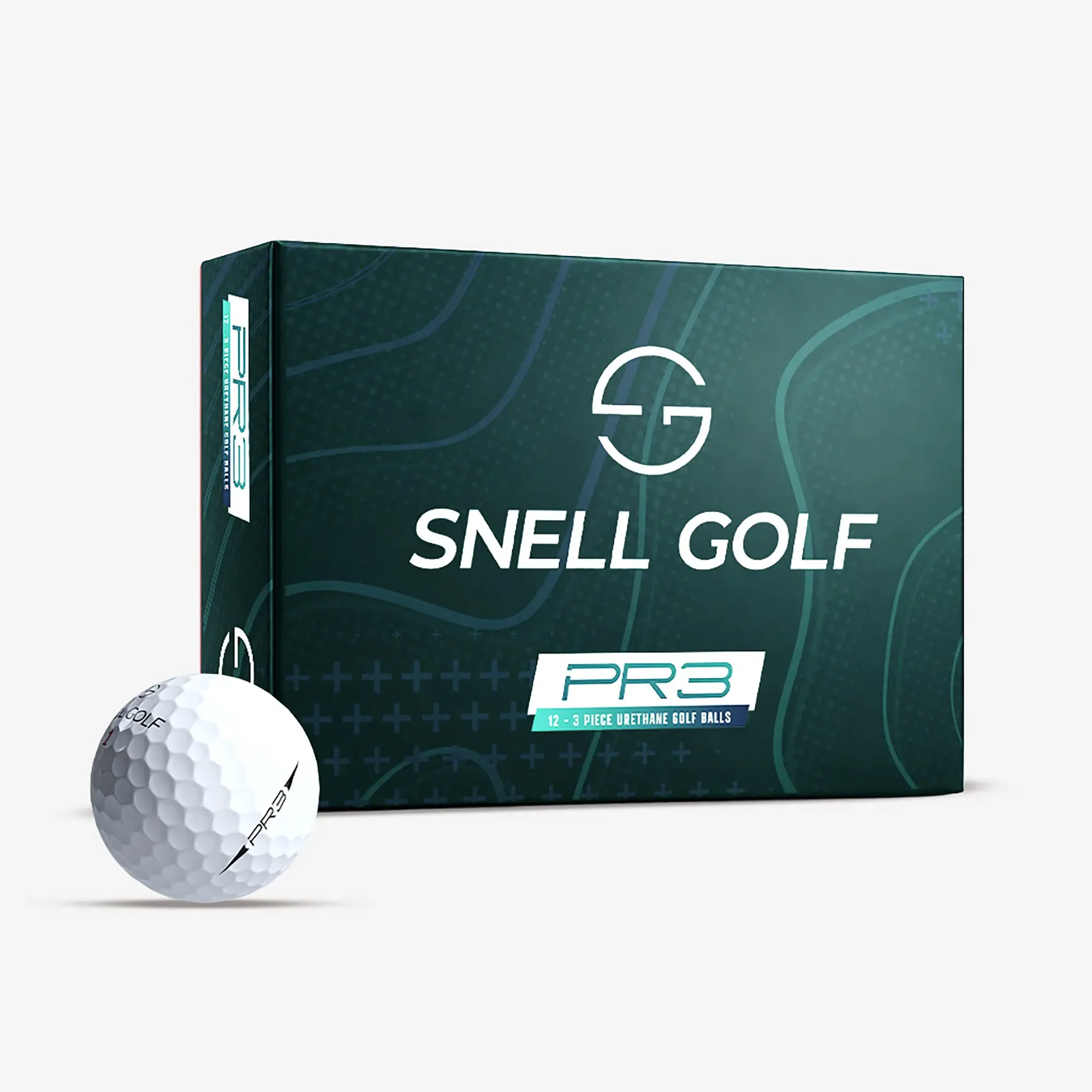
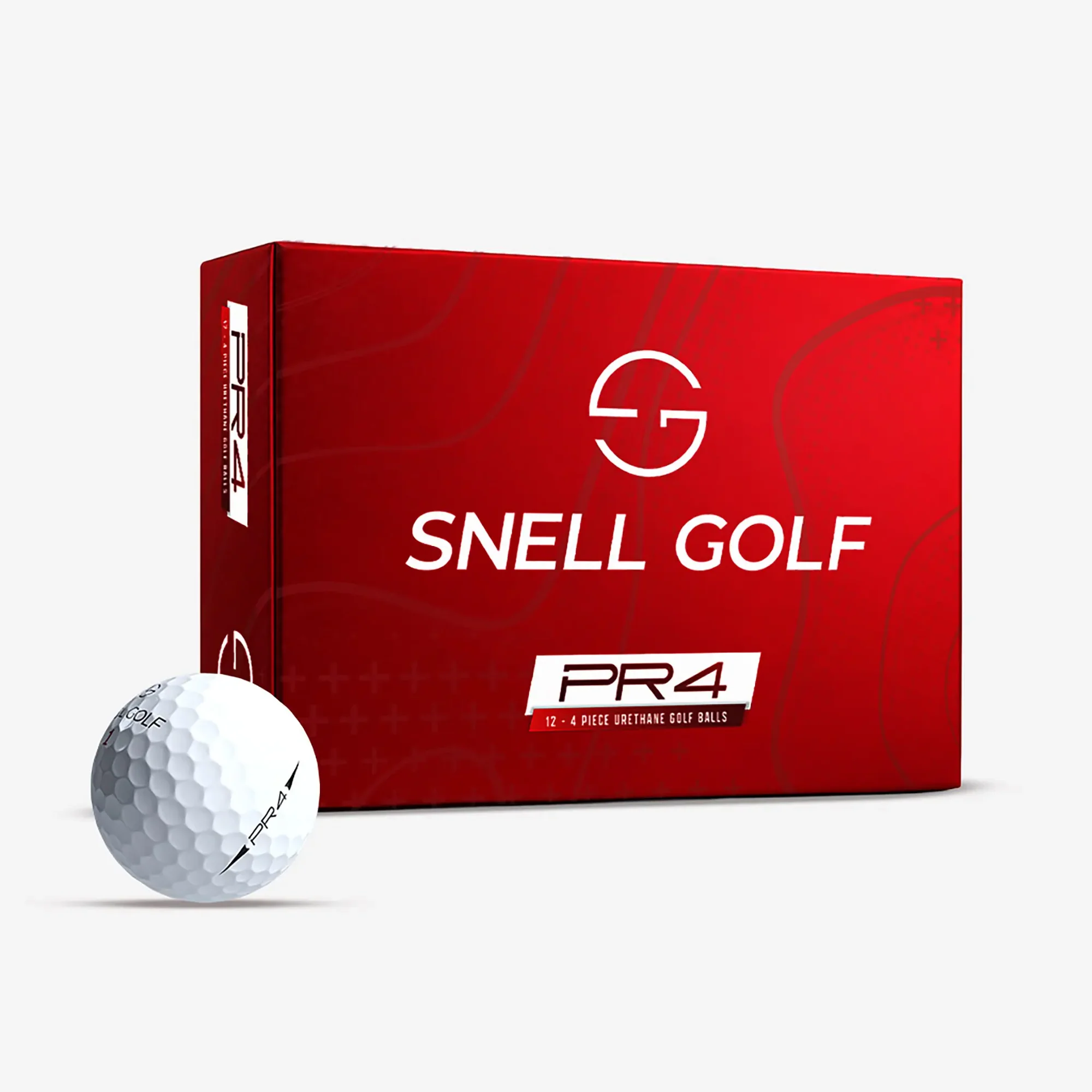
Specs at a Glance
| Spec | Snell PR3 | Snell PR4 |
|---|---|---|
| Construction | 3-piece | 4-piece |
| Cover | TPU-X Armor Urethane | TPU-X Armor Urethane |
| Compression | 80–85 | 85–90 |
| Feel | Soft-Firm | Firm |
| Driver Spin | Mid | Low |
| Driver Trajectory | Mid | Mid-High |
| Wedge Spin | High | High |
| Mantle Layers | 1 (single mantle) | 2 (dual high-energy) |
| Target Swing Speed | 80–105+ mph | 95+ mph |
| Price (2026) | $34.99/dozen | $34.99/dozen |
Head to Head
Feel Off the Putter and Irons
Edge: PR3 (softer, wider feel preference)Snell PR3
The PR3 sits at compression 80–85 — firmer than a soft ionomer ball, but meaningfully more accessible than most tour-quality balls. Off the putter it has a crisp, direct response with a satisfying feedback through impact. On short irons and wedges the TPU-X Armor urethane cover delivers a responsive, communicative feel that most mid-handicap golfers will find ideal. The soft-firm character makes it forgiving without feeling dead.
Snell PR4
The PR4 at compression 85–90 is noticeably firmer — this is a performance ball built for fast swingers, and the feel reflects that. Off the putter it has a precise, stiff response. On wedge shots it transmits impact information clearly. If you are used to playing firm balls or have been gaming a Pro V1x, the PR4 feel is natural. If you prefer a softer feel, the PR3 is the right choice — the difference is real and will be obvious in the first few putts.
Distance Off the Driver
Edge: PR4 (for 95+ mph swing speeds — clearer at 100+ mph)Snell PR3
The PR3 produces a mid-trajectory, mid-spin flight off the driver that is efficient across a broad swing speed range. From 80 mph it compresses well and carries reasonably. At 95–100 mph it holds its own against premium tour balls. What it does not do is aggressively minimize driver spin — that is not its design brief. For golfers who do not need to chase low spin numbers, the PR3 produces honest, consistent yardages.
Snell PR4
The PR4's dual high-energy mantle layers are specifically engineered to reduce driver spin for fast swingers. At 95–105 mph driver swing speed, the PR4 produces a lower, more penetrating ball flight with tighter dispersion than the PR3. If you are consistently spinning the driver too high and losing carry, the PR4 is the direct remedy. The low-spin design is a meaningful performance advantage in this swing speed window — and the PR3 cannot replicate it.
Short Game and Greenside Spin
Edge: Tie (same cover, comparable wedge spin)Snell PR3
Both balls share the same TPU-X Armor urethane cover, so the short-game performance is very similar. The PR3 generates high wedge spin with a grabby, consistent bite from tight lies. On pitch shots and chips around the green it responds predictably and gives the kind of feedback that confident short-game players expect. For most golfers — even low handicappers — the PR3 fully satisfies all short-game demands.
Snell PR4
The PR4 also uses the TPU-X Armor cover and produces comparable short-game spin to the PR3. The slight difference is in trajectory: the PR4's firmer construction and lower-spin profile means its wedge shots come in a touch flatter, which some players prefer on firm greens. The actual spin numbers off wedges are very similar between the two. Short game is not a meaningful reason to choose one over the other.
Wind Performance
Edge: PR4 (meaningful in windy conditions)Snell PR3
The PR3's mid-trajectory flight holds up reasonably in a crosswind but is not built for boring through wind. In breezy conditions it will move around more than a dedicated low-spin ball. For casual golfers or those who play sheltered courses, this is not a problem. In exposed, windy conditions at the club level, you will notice the difference versus a dedicated low-spin option.
Snell PR4
The PR4 was engineered for low driver spin, and that design pays dividends in the wind. The penetrating, low-mid trajectory stays under the breeze more effectively and drifts less in crosswinds. For golfers who play exposed links-style courses or deal with regular wind, the PR4's flight profile is a genuine advantage that the PR3 cannot match. In strong winds, the PR4 may give you a full club of extra distance.
Which Swing Speed Fits Each Ball
Edge: PR3 (under 95 mph) · PR4 (95 mph and above)Snell PR3
The PR3 has a wide compression window. At 80 mph you can compress it efficiently and get good energy transfer. At 95 mph you can compress it fully and get tour-quality performance. The versatility is the point — this is a ball designed to work across the range of mid-to-low handicap golfers without requiring a specific swing profile. If your swing speed is variable or you are unsure of your exact number, the PR3 is the safer choice.
Snell PR4
The PR4 is optimized for 95 mph and above. Below that threshold, you may not compress the dual mantle system fully and the low-spin design will not deliver the distance advantage it is built for. At 100–110 mph, the PR4 is in its ideal window — the low-spin profile is being used as intended and the distance and consistency gains are real. If your driver swing speed is reliably above 95 mph, the PR4 is worth the specification.
How to Know Which Ball You Need
If you have never measured your swing speed, here are some practical proxies. The carry distances below assume reasonable ball striking — not your best shot, your typical shot.
| Driver Carry | Approx. Swing Speed | Right Ball |
|---|---|---|
| Under 200 yards | Under 85 mph | PR3 (or softer) |
| 200–220 yards | 85–95 mph | PR3 |
| 220–240 yards | 95–105 mph | PR4 |
| 240–260 yards | 105–115 mph | PR4 |
| 260+ yards | 115+ mph | PR4 |
Our Verdict
This one is simple. Both balls cost the same. Just pick based on your swing speed.
Under 95 mph — play the PR3. It compresses better for you and you'll get more distance. Over 95 mph — play the PR4. The tighter spin helps your ball flight and holds up better in the wind.
Don't pick the PR4 because it sounds like an upgrade. Pick the one that matches your speed. If you don't know your swing speed, find out — it's the most important number in this decision.
Where to Buy
Snell Golf sells direct to consumer — no retailers, no markup. Both balls are available only at snellgolf.com for $34.99 per dozen.
Frequently Asked Questions
What is the difference between the Snell PR3 and PR4?
The PR3 is a 3-piece ball with compression 80–85, designed for a wide range of golfers from 80 to 105+ mph. The PR4 is a 4-piece ball with compression 85–90 and dual high-energy mantle layers specifically engineered to reduce driver spin for swing speeds of 95 mph and above. Both cost $34.99 per dozen and use the same TPU-X Armor urethane cover.
Which Snell ball should I use if I don't know my swing speed?
Start with the PR3. It has a wider performance window and is the safer choice for golfers who are unsure of their exact swing speed. A rough guide: if you carry your driver under 220 yards on a typical shot, play the PR3. If you regularly carry 220 yards or more, the PR4 is worth trying.
Is the Snell PR4 better than the PR3?
Not better — different. The PR4 is better for swing speeds of 95 mph and above because its dual-mantle system is engineered for that range. Below 95 mph, you are not compressing the PR4 fully and the low-spin design is underused. In that situation the PR3 is the better-performing ball because it matches your swing.
Does the PR3 or PR4 have more greenside spin?
Both balls use the same TPU-X Armor urethane cover and produce comparable wedge spin. The short-game performance is essentially identical between the two. The meaningful differences are in driver spin, compression, feel, and wind performance — not around the green.
How does the Snell PR3 compare to the Titleist Pro V1?
The PR3 and Pro V1 are closely matched 3-piece urethane balls with similar feel and short-game spin profiles. The Pro V1 has a slight edge in greenside refinement at the elite level, but at handicap 5 and above the performance gap is difficult to detect on the course. The PR3 costs $19 less per dozen — about $228 per year for a weekly golfer.