
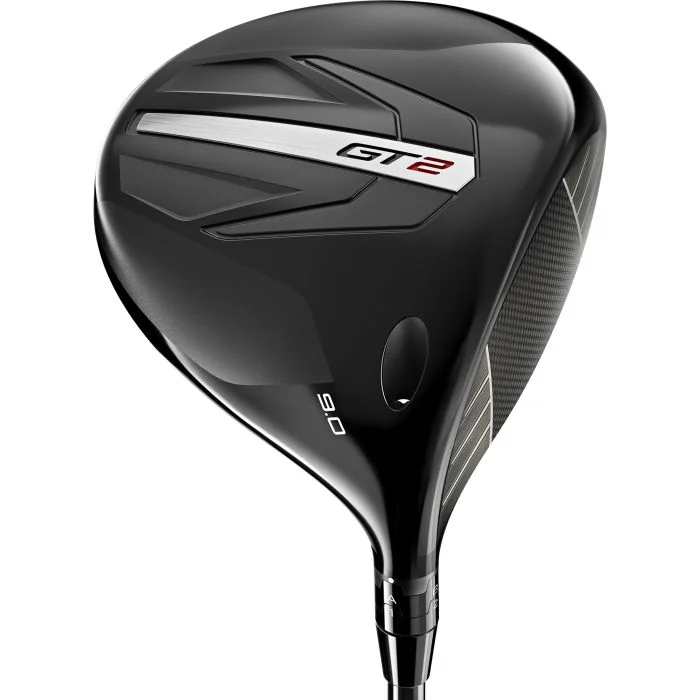
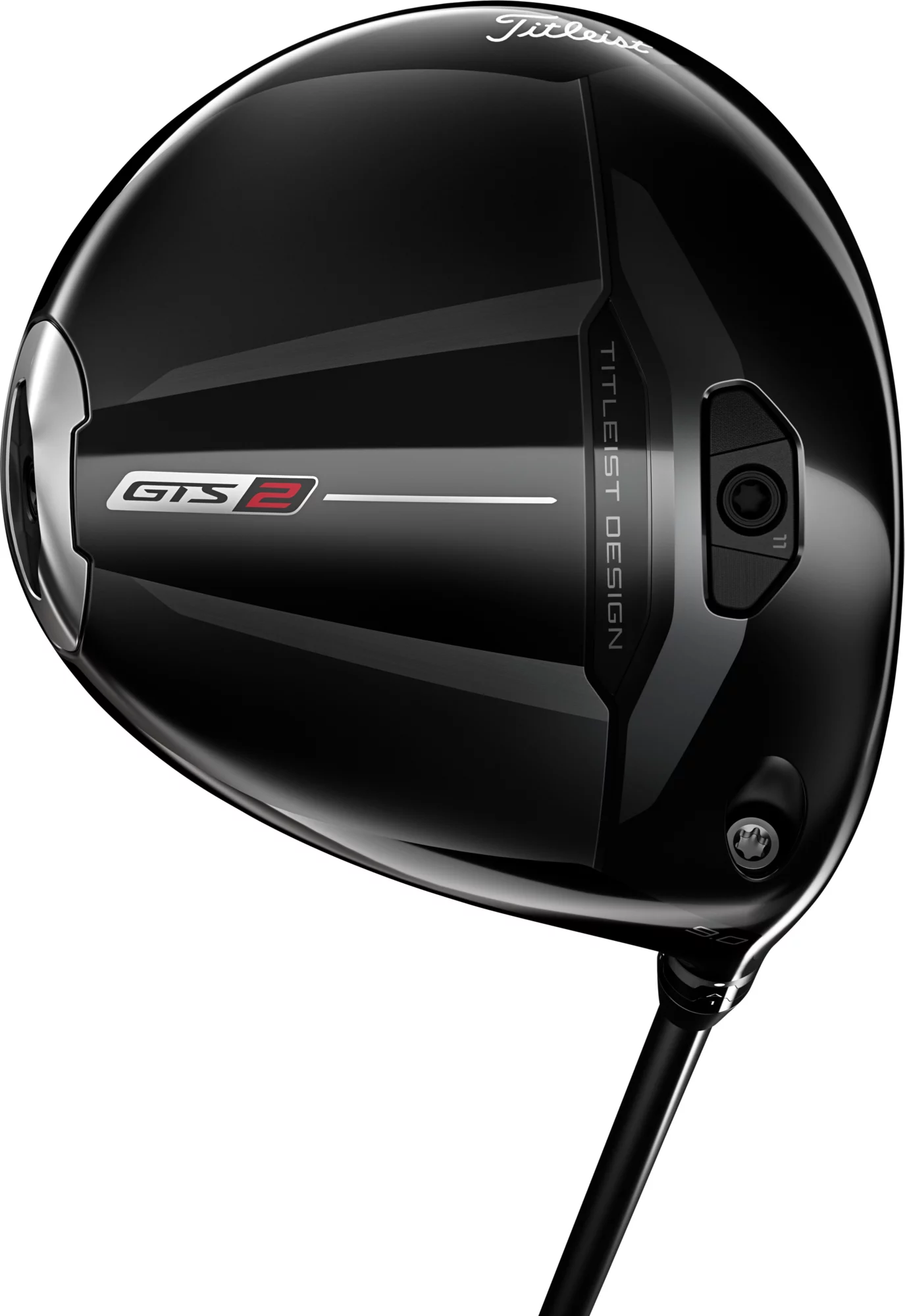
Quick Verdict
Buy GT2 if...
- · You want exceptional forgiveness at $200 less
- · You hit the center of the face consistently
- · The GT2's adjustability is sufficient for your fitting
- · You don't need the GTS2's rear weight upgrade
Buy GTS2 if...
- · You frequently miss low on the face
- · You want the highest MOI Titleist has made
- · Justin Thomas and Jordan Spieth playing it matters
- · You're upgrading from a driver 3+ years old
The key upgrade: The GTS2 doubles the PMP composite coverage from ~30% to ~60%, which lowers the CG significantly and raises MOI. Combined with the Speed Sync face and front/rear weight swap, the GTS2 is meaningfully more forgiving on low-face contact than the GT2 — the one miss pattern that most amateur golfers produce most often.
Specs Comparison
| Spec | GT2 (2024) | GTS2 (2026) |
|---|---|---|
| Head Size | 460cc | 460cc |
| Face Tech | Speed Ring VFT | Speed Sync |
| PMP Material | ~30% coverage | ~60% coverage |
| CG System | 2-weight (fixed pos.) | Front/rear weight swap |
| Launch | High | High |
| Spin | Mid | Mid |
| Forgiveness | Very High | Highest |
| Loft Options | 8°, 9°, 10°, 11° | 8°, 9°, 10°, 11° |
| Hosel | 16-way SureFit | 16-way SureFit |
| Price (2026) | ~$399–499 (sale) | $699 (MSRP) |
Head-to-Head Breakdown
What Changed: Speed Sync Face and More PMP
GT2 (2024)
The GT2 uses TaylorMade's Speed Ring VFT face — a variable-thickness design that maintains ball speed across a wide area. It is an excellent performer and one of the reasons the GT2 was rated among the most forgiving drivers of 2024. The face technology is proven and still very competitive.
GTS2 (2026)
The GTS2 introduces Speed Sync — Titleist's new face architecture that optimizes thickness distribution for better ball speed on strikes toward the lower portion of the face, where most amateurs miss. Combined with doubled PMP composite material (from ~30% to ~60% coverage), the CG drops lower and the MOI increases meaningfully. On low-face strikes specifically, the GTS2 is a measurable step forward.
Forgiveness and MOI
GT2 (2024)
The GT2 was Titleist's most forgiving driver at launch in 2024. Its MOI is high — well above what previous TSR models offered — and the 460cc head provides full confidence at address. Off-center strikes lose modest distance and stay reasonably on-line. For the mid-to-high handicapper it was a significant upgrade over TSR2.
GTS2 (2026)
The GTS2 pushes the MOI higher than the GT2 through the combination of doubled PMP coverage and the front/rear weight swap system. The rear weight position in particular maximizes MOI — moving it forward when you need more workability. On heel, toe, and especially low-face strikes, the GTS2 produces better ball speed than the GT2. The forgiveness gap is real, though not dramatic — think 3–5 yards on a bad swing.
Distance
GT2 (2024)
Center-face distance with the GT2 is excellent. It generates efficient ball speed across a wide swing speed range, and the high-launch profile keeps carry numbers competitive regardless of how you swing it. For golfers who hit it flush frequently, the GT2 is not meaningfully shorter than the GTS2 — the distance difference comes almost entirely from mishits.
GTS2 (2026)
The GTS2's distance advantage shows on the shots you don't intend. On center contact, the difference is marginal. On off-center contact — particularly low on the face — the GTS2's Speed Sync face and lower CG recapture more ball speed. Over 18 holes, that means fewer 'dead' drives and more consistent yardages. If you have a consistent, repeating swing, the distance gain from upgrading is minimal.
Adjustability and Fitting
GT2 (2024)
The GT2 uses two fixed-position weights, giving a draw or fade bias option but limited CG range compared to a sliding track system. The 16-way SureFit hosel provides solid loft and lie adjustment. For most recreational golfers, the GT2's adjustability is more than adequate.
GTS2 (2026)
The GTS2 upgrades to a front/rear weight swap — the same weight can be positioned toward the front (lower spin, slightly more workability) or rear (maximum MOI, draw tendency). This gives a meaningful additional fitting variable beyond the hosel. Fitters can optimize both launch and spin simultaneously, which is particularly useful for golfers with inconsistent attack angles.
Is the Upgrade Worth $200?
Upgrading from GT2
Marginal — the GTS2 is better, but the gap is not $200 worth of better unless low-face mishits are costing you real distance.
Upgrading from TSR2 or older
Yes — going from TSR2 to GTS2 is a significant step up in MOI and face technology. The GT2 at $399–499 is also excellent value here.
First premium driver purchase
The GT2 at its current price is exceptional value. The GTS2 is better if budget allows, but the GT2 is not a compromise.
Verdict
The GTS2 is the better driver. More forgiving, faster face, better for most golfers. Justin Thomas and Jordan Spieth play it on tour — not because of a contract, but because it works.
The GT2 at $399–499 is still great, and the value is excellent at that price. If you're choosing between the two, get the GTS2 — the improvements are real. But don't hesitate to buy the GT2 if budget is tight.
Where to Buy
Frequently Asked Questions
What is the difference between the Titleist GT2 and GTS2?
The GTS2 adds Speed Sync face technology, doubles the PMP composite material coverage from ~30% to ~60%, and upgrades the CG system to a front/rear weight swap. The result is higher MOI — especially on low-face contact — and more fitting flexibility. The GT2 uses the older Speed Ring VFT face and 2-position fixed weights. Both are 460cc high-launch forgiveness drivers.
Is the GTS2 significantly better than the GT2?
Better, yes — significantly, only in specific areas. The GTS2 improves measurably on low-face mishits and has more CG adjustment range. On center-face contact, the distance difference is marginal. For a consistent ball-striker, the performance gap is narrow. For someone who frequently catches the ball low on the face, the GTS2 is a real step forward.
Who plays the Titleist GTS2 on tour?
Justin Thomas and Jordan Spieth both play the GTS2 on the PGA Tour. Both are noted for demanding precision from their equipment, which validates the GTS2 beyond its forgiveness marketing.
What is the price difference between GT2 and GTS2?
The GTS2 retails at $699. With the GTS lineup at full retail, the GT2 has dropped to approximately $399–499 depending on retailer. That is a $200–300 gap for one generation of technology.