
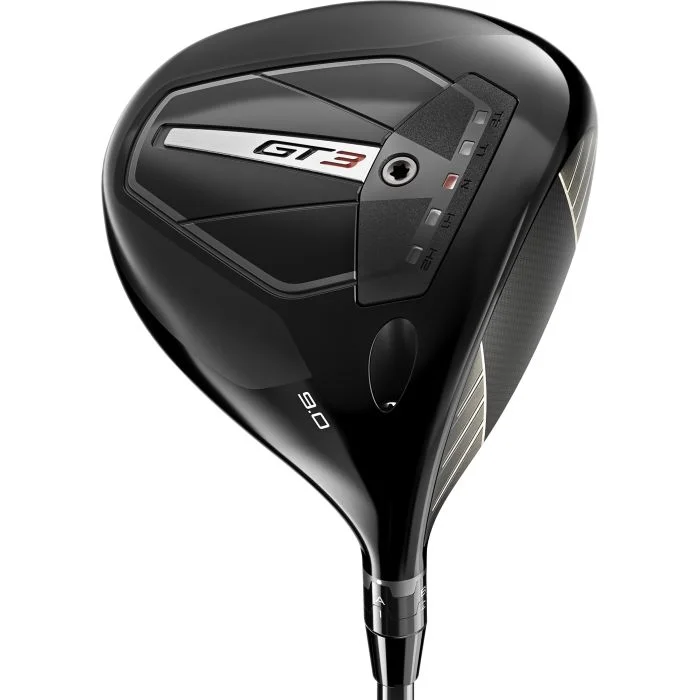
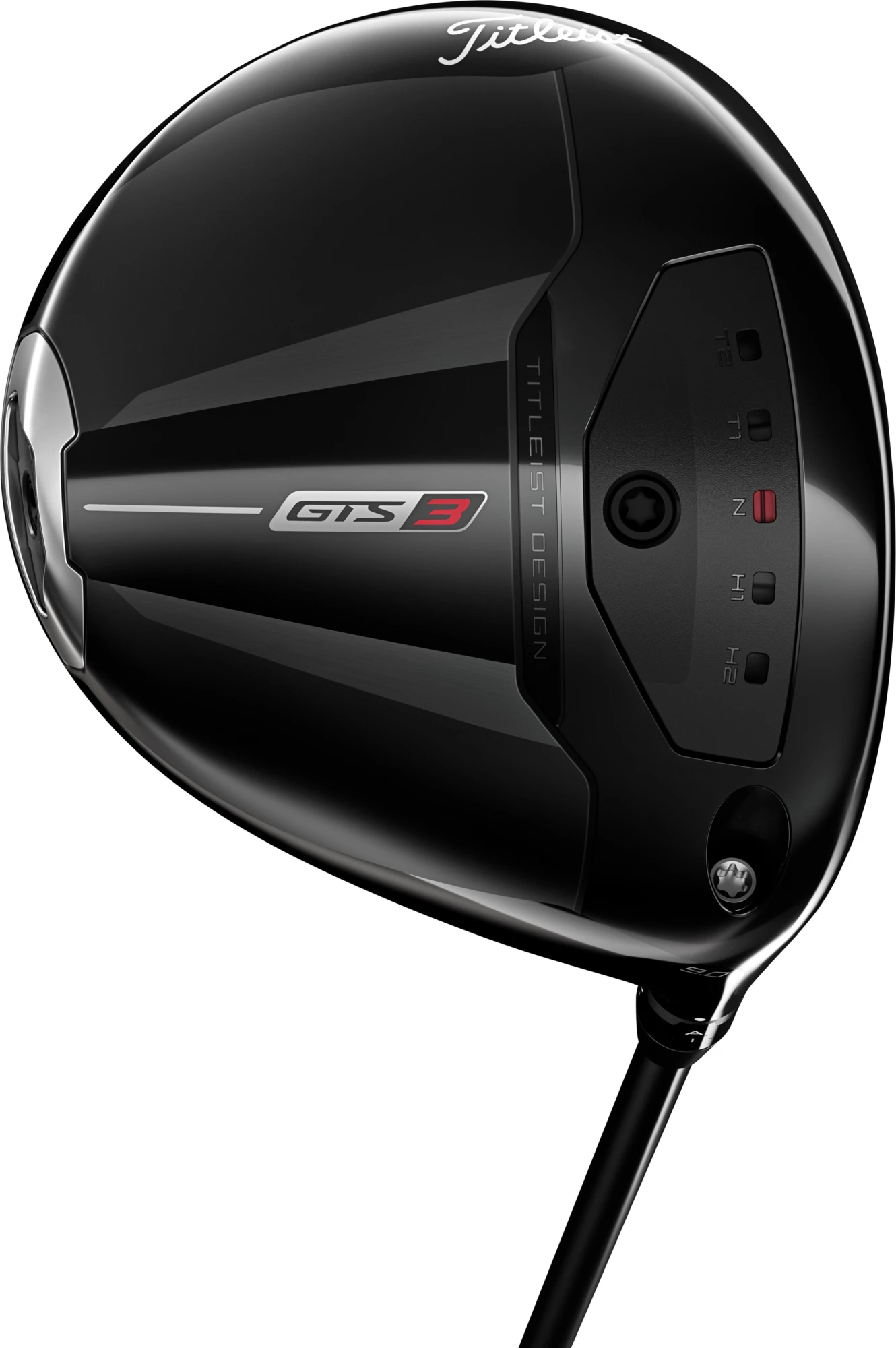
Quick Verdict
Buy GT3 if...
- · You want lower spin without going to a compact head
- · You swing between 90–100 mph and want mid-high launch
- · The 5-position track adjustability isn't a priority
- · You want $200+ in savings vs the GTS3
Buy GTS3 if...
- · You swing above 100 mph and want lower spin
- · You want the most fitting-flexible player's Titleist ever
- · You prefer a compact head at address
- · You're a consistent ball striker upgrading from GT3
The biggest change: The GTS3's 5-position sliding weight track is new for the '3' model — no previous Titleist player's driver has offered this level of CG adjustment. It changes the fitting equation significantly: where the GT3 needed the SureFit hosel to do most of the work, the GTS3 can be dialed in at both the face and head level.
Specs Comparison
| Spec | GT3 (2024) | GTS3 (2026) |
|---|---|---|
| Head Size | 460cc | Compact |
| Face Tech | Speed Ring VFT | Speed Sync |
| PMP Material | ~30% coverage | ~60% coverage |
| CG System | Fixed rear weight | 5-pos track + rear weight |
| Launch | Mid-High | Low-Mid |
| Spin | Low-Mid | Low |
| Forgiveness | High | Mid |
| Workability | Mid | High |
| Loft Options | 8°, 9°, 10°, 11° | 8°, 9°, 10°, 11° |
| Hosel | 16-way SureFit | 16-way SureFit |
| Price (2026) | ~$399–499 (sale) | $699 (MSRP) |
Head-to-Head Breakdown
Head Shape and Profile
GT3 (2024)
The GT3 uses a full 460cc head with a slightly shallower, more compact-feeling profile at address compared to the GT2. It suits mid-to-low handicappers who want the reassurance of a standard-size head but prefer a cleaner look and lower spin than the GT2 provides. At address it sits closed slightly more neutrally than the GT2.
GTS3 (2026)
The GTS3 goes to a genuinely compact head — smaller than the GT3 at address. This is a deliberate step toward the better-player market: the more compact shape gives skilled golfers a cleaner view of the face at address and promotes workability. It is a more committed player's profile than the GT3. If you were on the fence with the GT3, the GTS3's head shape is more demanding.
Spin and Launch Profile
GT3 (2024)
The GT3 produces a mid-high launch with low-mid spin — lower than the GT2 but not dramatically so. It suits golfers in the 90–105 mph range who want to reduce spin without sacrificing launch height. The trajectory is penetrating enough to hold in wind and high enough to carry obstacles without being aggressive about either.
GTS3 (2026)
The GTS3 produces a lower launch and lower spin than the GT3. The compact head, forward CG positioning, and 5-position weight track (which can be moved toward the front of the head) all contribute to a more penetrating flight. For golfers consistently above 100 mph who already produce mid-high launch, the GTS3's profile is more efficient. Below 95 mph, it can produce too low a trajectory for maximum carry.
Adjustability and Fitting
GT3 (2024)
The GT3 has a fixed rear weight with limited CG adjustment. The 16-way SureFit hosel provides loft and face angle adjustment. For golfers who don't need to fine-tune draw/fade bias or CG position, the GT3's setup is sufficient — but it cannot match the GTS3 for fine-tuned fitting.
GTS3 (2026)
The GTS3's 5-position sliding weight track is the most significant fitting upgrade over the GT3. Moving the weight toward the toe promotes a fade; toward the heel promotes a draw; at the front it lowers spin; at the rear it adds a little more forgiveness. Paired with a rear weight option and the SureFit hosel, the GTS3 gives fitters far more control than any previous Titleist '3' model. If you have a specific shot shape or spin target, the GTS3 can be dialed in more precisely.
Forgiveness
GT3 (2024)
The GT3 is more forgiving than many golfers expect from a 'player's driver' label. Its 460cc head and Speed Ring VFT face maintain decent ball speed on off-center strikes — better than TSR3 and competitive with what other brands call 'mid-forgiveness' drivers. It is not a max-forgiveness club but it is not punishing either.
GTS3 (2026)
The GTS3 steps back slightly in forgiveness compared to the GT3. The compact head and more forward CG positioning — by design — reduce MOI relative to the GT3's full 460cc setup. On toe and heel strikes, the GTS3 loses a little more ball speed than the GT3. For skilled ball strikers this is a non-issue; for mid-handicappers who want the GTS3 for its lower spin, it is worth understanding the trade-off.
Verdict
The GTS3 is the better driver if you swing over 100 mph and want a low-spin player's driver with more forgiveness than the GT3. The 5-position weight track adds fitting flexibility the GT3 never had.
The GT3 is still a great driver — especially used at $399–499. If you swing 90–100 mph and don't need the extra adjustability, it saves you money and performs very well.
Where to Buy
Frequently Asked Questions
What is the difference between the Titleist GT3 and GTS3?
The GTS3 upgrades to a compact head shape, Speed Sync face technology, doubled PMP material coverage, and a 5-position sliding weight track — the biggest adjustability upgrade in the '3' model's history. The GT3 uses a full 460cc head with fixed rear weight and the older Speed Ring VFT face. The GTS3 produces lower spin and launch; the GT3 is slightly more forgiving.
Is the GTS3 more forgiving than the GT3?
No — the GT3 is more forgiving. The GTS3's compact head reduces MOI compared to the GT3's full 460cc head. This is intentional: the GTS3 targets better ball strikers who want workability and lower spin, not maximum forgiveness. If forgiveness is the priority, the GTS2 is the right choice.
What swing speed is the GTS3 designed for?
The GTS3 targets golfers consistently above 100 mph who generate excess spin. Below 95 mph, the GTS3's low-launch, low-spin profile will produce too little carry height. The GT3's mid-high launch profile is more appropriate for the 90–100 mph range.
Can I still buy the GT3 new?
Yes — with the GTS lineup at full retail, the GT3 is available new at approximately $399–499 depending on the retailer. It remains an excellent driver and one of the best values in the low-spin player's category.