
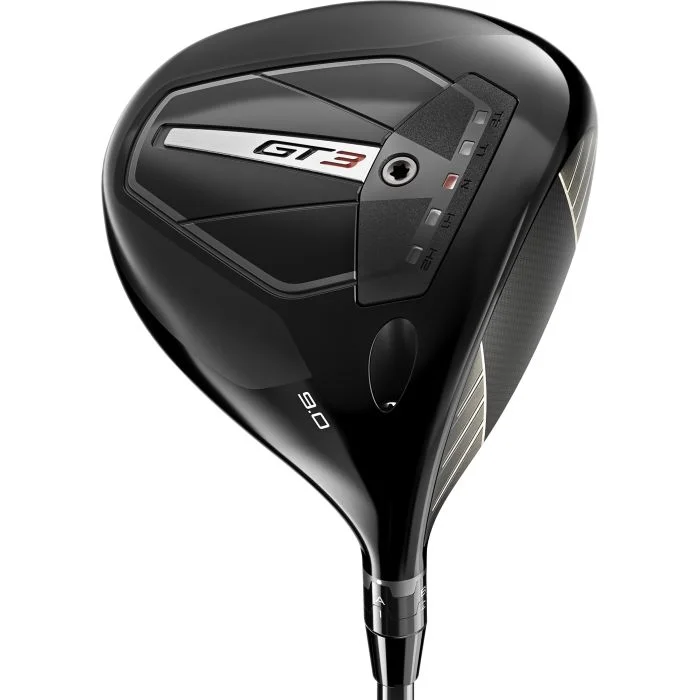
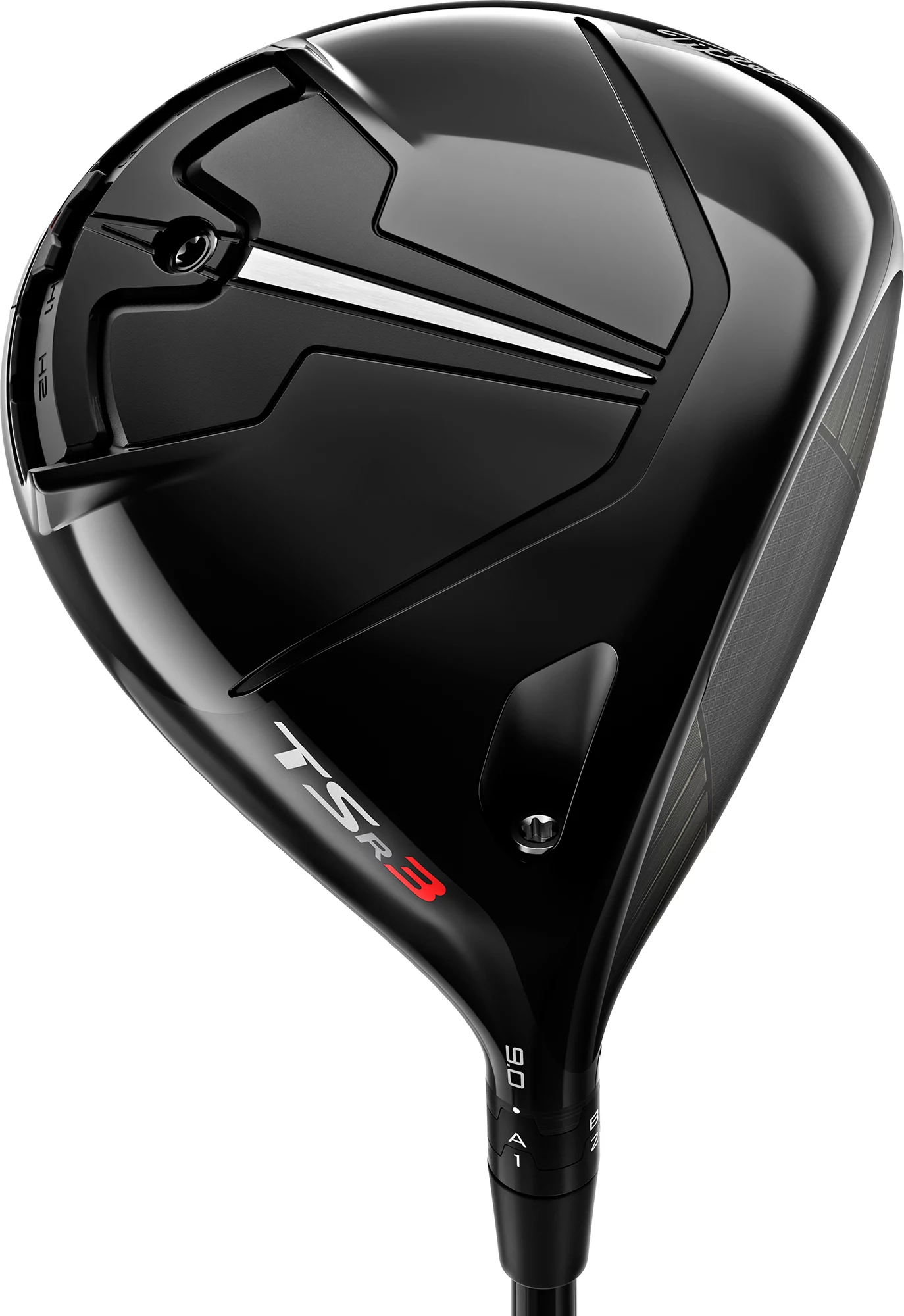
- +You are buying a new driver and budget is not the primary constraint
- +You swing 100+ mph and want every fraction of ball speed
- +You want the most precise SureFit CG adjustment Titleist offers
- +You play competitive golf and the generation gap matters
- +You want the latest carbon Speed Chassis construction
- +You want a player-class Titleist driver for ~$275
- +You swing 95–105 mph and value will not limit your performance
- +You want to spend the $375 difference on a proper shaft fitting
- +You already own a TSR3 and are undecided about upgrading
- +You want the same SureFit CG adjustability at a fraction of the cost
Specs Comparison
| Spec | GT3 | TSR3 |
|---|---|---|
| Generation | 2025 (current) | 2023 (previous) |
| Head Size | 460cc | 460cc |
| Construction | Carbon Speed Chassis + titanium body | Titanium |
| Adjustability | SureFit CG track | SureFit CG track |
| Ball Speed | Higher (updated face geometry) | High (competitive) |
| Launch | Mid | Mid |
| Spin | Mid-Low | Mid-Low |
| Target Golfer | 95+ mph, 0–15 handicap | 95+ mph, 0–15 handicap |
| Loft Options | 8°, 9°, 10°, 10.5° | 8°, 9°, 10°, 10.5° |
| Price | ~$649 new | ~$275 used |
Head to Head
Ball Speed and Face Performance
Edge: GT3 (~2–4 mph ball speed)GT3
The GT3's carbon Speed Chassis reduces body weight significantly compared to the TSR3's full-titanium construction. That freed mass is repositioned for a more precisely calibrated CG and a thinner, more flexible face. The result is a measurable improvement in ball speed, particularly from center-face and slightly off-center strikes. Independent launch monitor testing puts the GT3 approximately 2–4 mph faster in ball speed than the TSR3 for comparable swing speeds — which translates to roughly 4–8 yards of carry at 100 mph.
TSR3
The TSR3's titanium construction with Titleist's SureFit CG was the best face speed the 2023 generation could deliver. It was competitive at launch and is still a fast driver — the physics of the TSR3 did not change when the GT came out. On a launch monitor, a well-fitted TSR3 can still match the GT3 within margin of error for many swings. The face speed gap is real but not dramatic enough to show up in every round.
SureFit CG Adjustability
Edge: GT3 (more precise CG effect)GT3
The GT3 keeps the SureFit CG track that has been a Titleist staple since the TSR generation. The track allows the movable weight to be positioned toward the heel (draw bias) or toe (fade/neutral) with meaningful effect on shot shape. The GT3's refined chassis geometry means the CG positions are more precisely differentiated than the TSR3's — moving the weight has a more predictable and slightly larger effect on ball flight.
TSR3
The TSR3 also has the SureFit CG track, giving it the same draw/fade adjustment capability. For golfers who want to shape the ball or correct a persistent miss, the TSR3's adjustment system is fully functional and does the same job. The difference from the GT3 is in precision and magnitude of effect — the GT3 adjusts more noticeably. For most golfers who use the adjustment once during setup and leave it there, the difference is irrelevant.
Sound and Feel
Edge: Personal preference; GT3 for softness, TSR3 for traditional feelGT3
The GT3's carbon Speed Chassis changes the acoustic character compared to the TSR3. The carbon construction absorbs more vibration, producing a softer, slightly more muted sound at impact. It is not as soft as a full-carbon driver, but it is noticeably more refined than the TSR3's pure titanium impact feel. The feel through the hands is similarly cleaner — less metallic reverberation, more of a solid thud. Player-class golfers who are sensitive to sound will notice the difference.
TSR3
The TSR3 has Titleist's classic titanium driver sound — a sharp, crisp crack that many tour players and low-handicappers love. It is not harsh, but it is distinctly firm and present. For golfers who have played Titleist drivers since the TS generation, the TSR3 feels like a continuation of that signature. If you currently play a TSR3 and like the way it sounds and feels, the GT3 is an evolution rather than a departure.
Value
Edge: TSR3 used (value); GT3 (performance)GT3
At $649 new, the GT3 is a premium investment. Against the TSR3 at its launch MSRP of $599, the GT3 represented a modest step up in price for meaningful performance gains. Against a used TSR3 at ~$275, the calculation is much harder. You are paying $375 more for roughly 2–4 mph of ball speed, more precise CG adjustment, and updated construction. For a scratch golfer or a 5-handicapper who can genuinely use every yard and every bit of flight precision, the upgrade may be worth it. For a 12-handicapper, a well-fitted used TSR3 is an excellent driver that will not hold your game back.
TSR3
At ~$275 used, the TSR3 is one of the best value player-class drivers in the market. When the GT lineup launched in 2025, TSR drivers flooded the used market, and the TSR3 specifically became widely available from reputable retailers at a significant discount. A used TSR3 in a shaft that fits your swing is still a competitive, professional-grade driver. The money saved versus the GT3 buys a lesson package or a proper shaft fitting that would produce more improvement than the generation gap.
Should You Upgrade from the TSR3?
If you already have a TSR3 in your bag, the honest answer is: not unless you are playing at a level where 2–4 mph of ball speed and more precise CG adjustment actually changes your score. The TSR3 is still a professional-quality driver. Its CG track works. Its face is fast. It was good enough for tour players in 2023 and the physics have not changed.
The upgrade argument strengthens above 100 mph, where the GT3's ball speed gains from the carbon Speed Chassis are most pronounced and most exploitable. If you are a scratch or near-scratch golfer who plays competitive events and every yard matters, the GT3 justifies the spend. Below that threshold, the TSR3 used at $275 is a better allocation of budget.
The single biggest lever available to a TSR3 owner is shaft fitting, not driver replacement. A properly fitted shaft in the TSR3 will add more performance than swapping to an unfitted GT3. If you have $375 to spend, put it toward a shaft fitting first.
Our Verdict
Buying new and swing speed is above 100 mph? Get the GT3. The ball speed gains, carbon chassis, and refined CG adjustment are real and meaningful at that level.
Shopping on a budget or already own a TSR3? The used TSR3 at ~$275 is a premium Titleist player driver at a fraction of the current retail price. The same SureFit CG, the same target golfer, the same fundamental design — for $375 less.
The Titleist TSR3 was not a bad driver that got replaced — it was a very good driver that got incrementally improved. That distinction matters for the buying decision.
Frequently Asked Questions
Is the Titleist GT3 worth upgrading from the TSR3?
If you are buying new and swing above 100 mph, yes — the GT3's carbon Speed Chassis and updated face geometry deliver genuine ball speed gains and more precise CG adjustment. If you are comparing a new GT3 at $649 to a used TSR3 at ~$275, it is a harder case. Most golfers below 10 handicap who already have a TSR3 will not see score improvement that justifies the $375 gap without a professional fitting first.
What is the difference between the Titleist TSR3 and GT3?
The TSR3 (2023) uses full titanium construction with SureFit CG. The GT3 (2025) replaces the body with a carbon Speed Chassis that reduces weight and allows a more precisely engineered CG. The GT3's face geometry is also updated, producing 2–4 mph more ball speed for comparable swing inputs. Both are 460cc mid-spin player drivers with the same target golfer profile.
What is the TSR3 designed for?
The Titleist TSR3 is designed for skilled golfers — typically swing speeds above 95 mph and handicaps under 15 — who want a mid-spin driver with SureFit CG shot-shape control. It is not a max-forgiveness design. It suits players who hit the center of the face consistently enough to exploit the speed and trajectory precision the design offers.
How much does the Titleist TSR3 cost used?
The Titleist TSR3 typically sells used for around $275 from reputable retailers like 2nd Swing. When the GT series launched in 2025, TSR drivers moved into the used market at a significant discount from their original $599 MSRP, creating strong availability of well-conditioned TSR3 heads.
Is the TSR3 or GT3 better for a 10 handicap golfer?
At 10 handicap, either works well. The GT3 offers more ball speed and more precise CG adjustment for golfers who will exploit it. A well-fitted used TSR3 at $275 gives you professional-grade Titleist performance at $375 less. If you can get a fitting with the TSR3, that outperforms an unfitted GT3 for most 10-handicap golfers — fitting matters more than generation gap.